A demonstration site — this company, its technicians and its customers are not real.
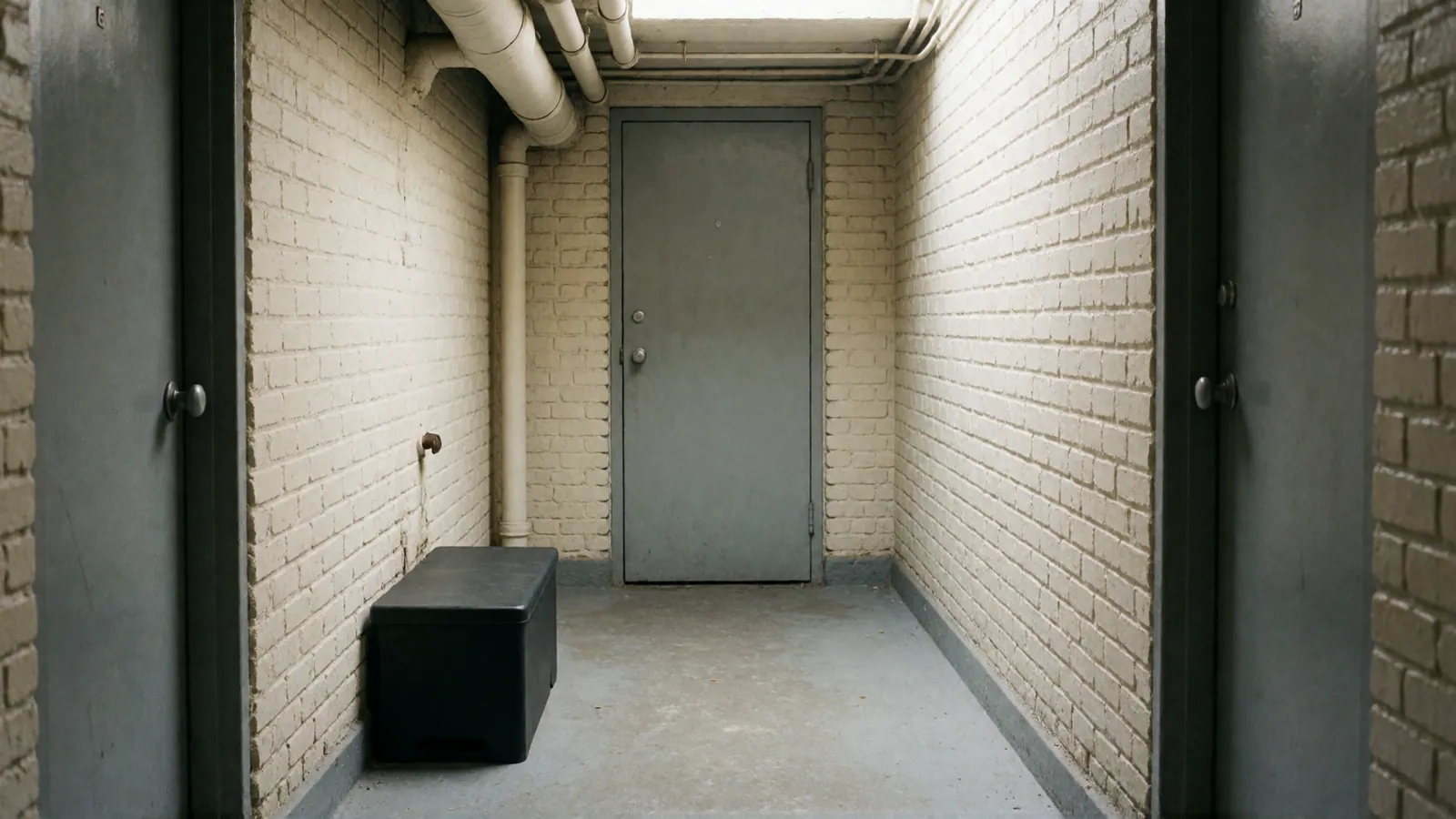
A clean basement corridor of painted brick with gray steel doors, and a plain black box standing against the wall on the concrete floor.

Places with their own rules

A building's monthly round, and the apartments that need more

The basement, the halls, the trash room and the foundation every month, and the apartments that need it, with the tenants told first.

  • A plan visit, $195 to $295

AI-generated illustration. Not a real home or business.

What a building's round covers

A building's visit is the parts everybody shares: the basement and the boiler room, the halls and the stairs, the trash room, and the bait stations against the foundation outside. Most of what reaches an apartment passes through one of those first, a cockroach in the trash room, a mouse along a basement pipe, a rat at a gap in the foundation, so that's where a plan spends its time.

The apartments that need more are added to a visit: you tell the office which ones, you give those tenants written notice, and each apartment treated adds its own line to that visit's invoice. A building's visits are booked on a weekday, in the windows 9 am to 11 am, 11 am to 1 pm, 1 pm to 3 pm and 3 pm to 5 pm, and never on a Saturday.

  • The owner gives each tenant written notice before we go into their apartment.
  • Work in tenants' apartments is on weekdays between nine and five.
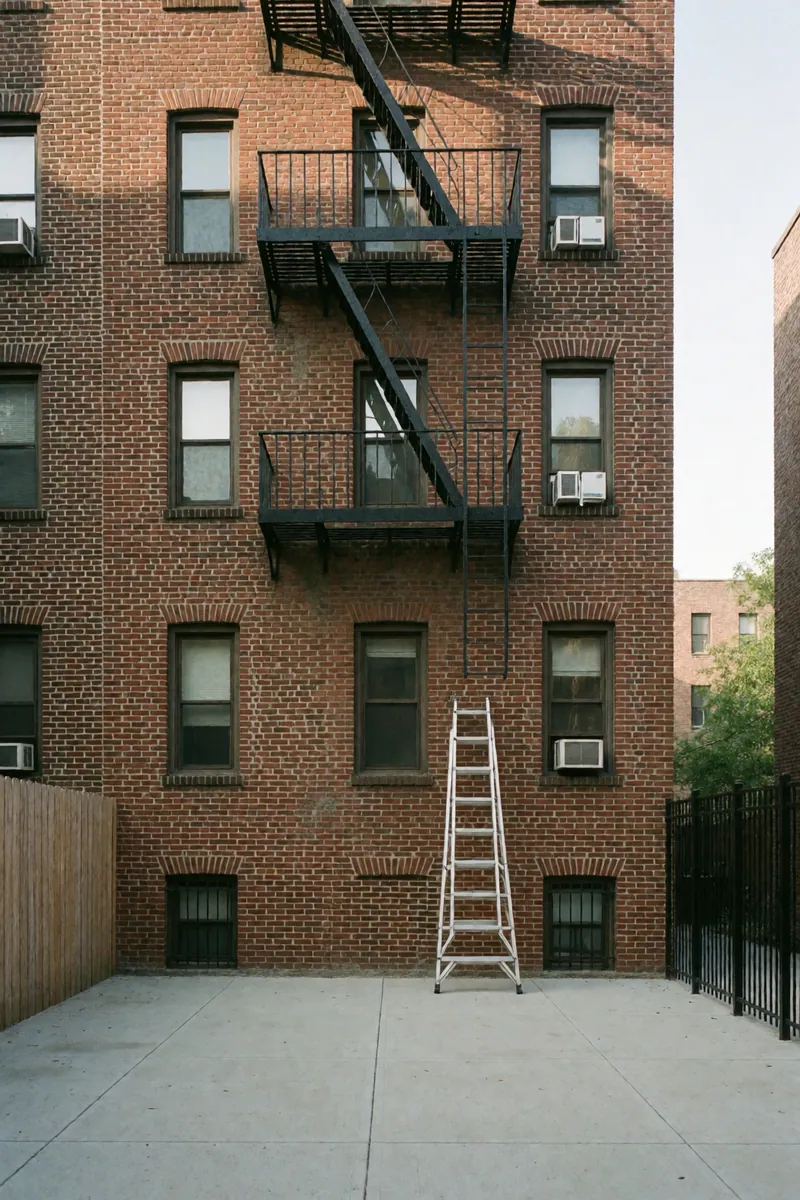
The back of a red-brick apartment building with a black iron fire escape climbing its wall, and a closed aluminum ladder standing against the brick below it in a clean concrete yard.AI-generated illustration. Not a real home or business.

Hamid Sarwari-Quinn

Technician, buildings and businesses

Basements, trash rooms and the monthly round of a building.

Hamid keeps a building's visits in the same order every month, so the superintendent knows where he'll be.

Nests on a fire escape or under a soffit are his, with the ladder.

What the City asks of an owner

New York City makes the owner of a multiple dwelling answer for its pests, and asks for the causes to be addressed first: the holes and gaps sealed, the leaks fixed, and pesticide used where it's needed rather than in place of a repair. The record each visit leaves says what was found and what was done, which is what an owner can show for the work.

Before a treatment in the building, the label information goes to the owner or the managing agent.

Tell your tenants first. When we inspect or treat tenants' apartments for you, the City requires you to give each tenant written notice first: twenty-four hours before an inspection, a week before work. We come on weekdays between nine and five unless the tenant agrees otherwise.

Causes first. New York City expects pest control to start with the causes: the gaps and holes that let pests in, the food and water they can reach, and the clutter they hide in. We close small gaps, set monitors and traps, and use pesticides only where they're needed, placed where pests travel.

When to book. Book an inspection at least twenty-four hours ahead, up to twenty-one days ahead. A building owner booking tenants' apartments books forty-eight hours ahead, and work in those apartments starts eight days after the agreement at the soonest, so the tenants can be told.

The City decides. We can't clear a violation, or promise how an inspection by the Health Department or the City's housing agency will go: that is the City's decision, made about your building or your business. What we give you is a written record of every visit.

The plan, priced per visit

Each visit is invoiced after it's done, with the sales tax on its own line. A plan covers cockroaches, mice or rats and ants between visits. Bed bugs, termites and a wasp or hornet nest are not part of a plan: each is booked as a course of its own or, without a course, quoted in writing.

Each plan visit before tax, invoiced after the visit. The first visit of a plan is the longer one: the whole place looked over, the monitors set, the gaps closed. Every visit after it is shorter.
The placeFirst visitMonthly, each visitQuarterly, each visit
A building of three to twelve apartments$195$195$295

A building's visit. A building's visit covers the basement, the halls, the trash room and the stations at the foundation; each apartment treated on that visit adds $20 to that visit's invoice.

More than twelve apartments. For a building of more than twelve apartments, telephone the office: a building that size is planned with its owner, not booked online.

Twelve months, then it stops. A monthly plan is twelve visits over twelve months; a quarterly plan is four. A plan ends after twelve months and doesn't renew unless you sign a new agreement. You can cancel it at any time online, by telephone or in writing, with no fee.

How an agreement works

When one apartment needs a course

Bed bugs or a heavy run of cockroaches in one apartment is a course of its own rather than a plan visit, and the apartments beside, above and below are worth a look. These are the courses an owner can book for a building's apartments.

Cockroach course

$324 to $465 before tax

A treatment, a second treatment two weeks later and a follow-up check two weeks after that.

A return visit within thirty days of the last scheduled visit is part of the course. The first visit is at least forty-eight hours after you sign, for the preparation.

Bed bug course

$597 to $996 before tax

A treatment, a second treatment two weeks later and a follow-up check two weeks after that.

We return until two checks in a row find no sign, within 120 days of the first treatment. The first visit is at least 72 hours after you sign, for the preparation.

Wasp nest course

$224 to $376 before tax

A treatment and a return to take the nest down two days later.

A return visit within seven days of the last scheduled visit is part of the course. The first visit is at least twenty-four hours after you sign, for the preparation.

A worked example, priced in full

Worked out with the same arithmetic as a real agreement: each visit's date, its price and the sales tax on it. The business is invented.

A monthly plan for an eight-apartment building A building owner in Elmhurst

  • The first plan visit, Friday, March 12, 2027two and a half hours; tax $17.31$195.00
  • A plan visit, Friday, April 9, 2027two and a half hours; tax $17.31$195.00
  • A plan visit, Friday, May 14, 2027two and a half hours; tax $17.31$195.00
  • Nine more visits at the same priceeach with the same tax$1,755.00
  • Before taxtwelve visits$2,340.00
  • Sales tax (8.875%)on each visit's invoice$207.72
  • In allinvoiced visit by visit$2,547.72

Signed on Thursday, March 4, 2027. A business has no three-day window; the first visit is Friday, March 12, 2027, 11 am to 1 pm. The plan ends on Saturday, March 11, 2028 and does not renew. A visit that treats three apartments as well is invoiced $255.00 and $22.63 tax, $277.63 in all.

Before anything is applied

What you're given before a treatment, and where to read more.

A written record. Every treatment leaves a written record: what was used, where, how much, for which pest and by whom. We keep it for three years, as New York asks of a pest control business, and you get a copy.

If they come back. If pests come back between visits, telephone the office. A return visit inside a course's return period, or at any time during a plan, is part of its price.

The label comes to you. We don't name products on this website. Before we treat, we give you the label information for every product we plan to use, including its warnings, on paper or by e-mail, whichever you prefer. After each visit you get a written record of what was used, where, and for which pest.

Book an inspection for apartment buildings

Book an inspection, at least twenty-four hours ahead. There's no charge for it, and nothing has to follow it.