The owner of the building
An owner who is treating pests seals the holes and gaps they use and fixes the leaks, and a pesticide doesn't take the place of that. That is the City's rule, in short; it is at the foot of this page.
Every job starts with an inspection, and there's no charge for it.
37-32 61st Street, Woodside, NY 11377
How the work is done
The gap, the drip and the food first; the monitors to show what changed; and a product last, placed where pests travel.
AI-generated illustration. Not a real home or business.
Causes first. New York City expects pest control to start with the causes: the gaps and holes that let pests in, the food and water they can reach, and the clutter they hide in. We close small gaps, set monitors and traps, and use pesticides only where they're needed, placed where pests travel.
New York City writes the approach into its housing code. As the City defines it, in short, integrated pest management means prevention, monitoring, removing what pests live on and hide in, traps, and pesticides only when necessary.
Read in order, that is a list of what to do first. A pesticide comes last, and then where it is needed, because a product put down in a kitchen with a hole behind the sink and a drip under it is working against the hole and the drip.
A kitchen is where most of this work happens. These are the places a technician looks, and what changes in each.
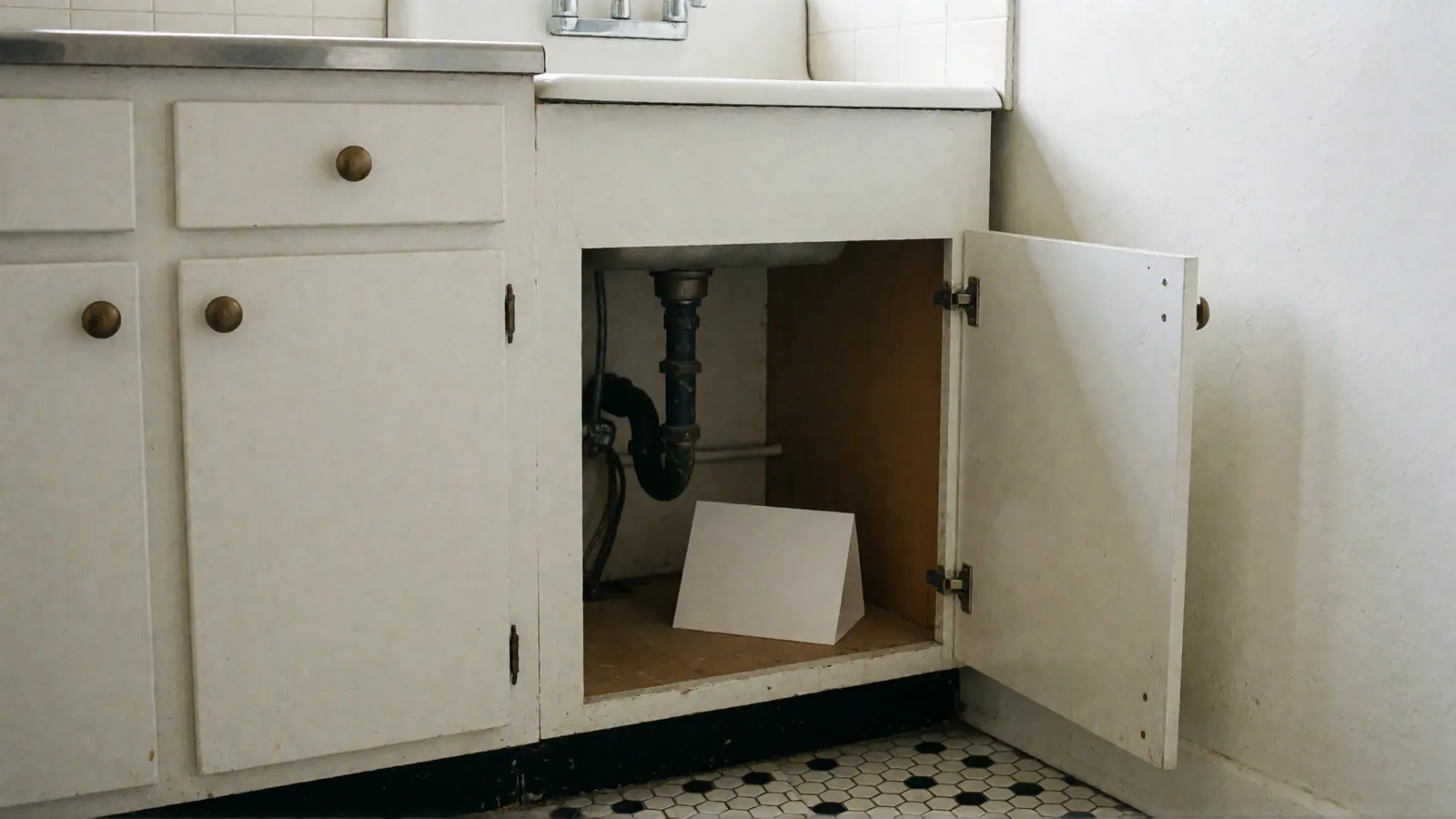
The pipes come through the back wall here, usually through a hole cut wider than the pipe, and the cabinet floor is often damp. That is water, warmth and a way in, in one place. The technician looks for droppings on the cabinet floor, closes the gap around the pipe, and asks about the drip.
Grease builds up on the floor and the wall where nobody can reach, and the gas line or the cable goes into the wall through another opening. Cockroaches live in the warmth at the back of the stove. Pulling it out and cleaning behind it does more than anything put down there.
The motor is warm all the time and the drip pan holds water, so the space underneath is where cockroaches and mice spend the night. A monitor goes beside it to show what is living there.
The hinges and the corners of the shelves are where German cockroaches hide during the day. Food goes into sealed hard containers, the paper bags and cardboard come out, and bait goes into the hinges.
Keep garbage in cans with tight lids, inside and outside. Recycling that waits under the sink for a week is a meal for a cockroach, so it goes out with the garbage.
Don't leave pet food out overnight. A water bowl on the floor is a drink for whatever lives behind the stove too, so the floor around it is kept dry.
Integrated pest management is shared work. Nobody can do all of it alone.
An owner who is treating pests seals the holes and gaps they use and fixes the leaks, and a pesticide doesn't take the place of that. That is the City's rule, in short; it is at the foot of this page.
Food sealed, garbage out, the drip reported, the clutter under the sink and in the closets cleared. If you rent and something needs fixing, it is the owner's to fix. Tell your landlord in writing first; you can also call 311.
We close small gaps, set monitors and traps, and use pesticides only where they're needed, placed where pests travel. And then a follow-up visit, to see from the monitors what changed.
A technician who arrives and starts treating hasn't learned yet what the pest is, where it is coming from or what it is living on, and those three answers decide everything after. Every job starts with an inspection. There's no charge for it, and you don't have to book anything after it. What the inspection looks at.
Each is described in a sentence of its own.
Book an inspection, at least twenty-four hours ahead. There's no charge for it, and nothing has to follow it.