How the work is done
Sealing the gaps pests use
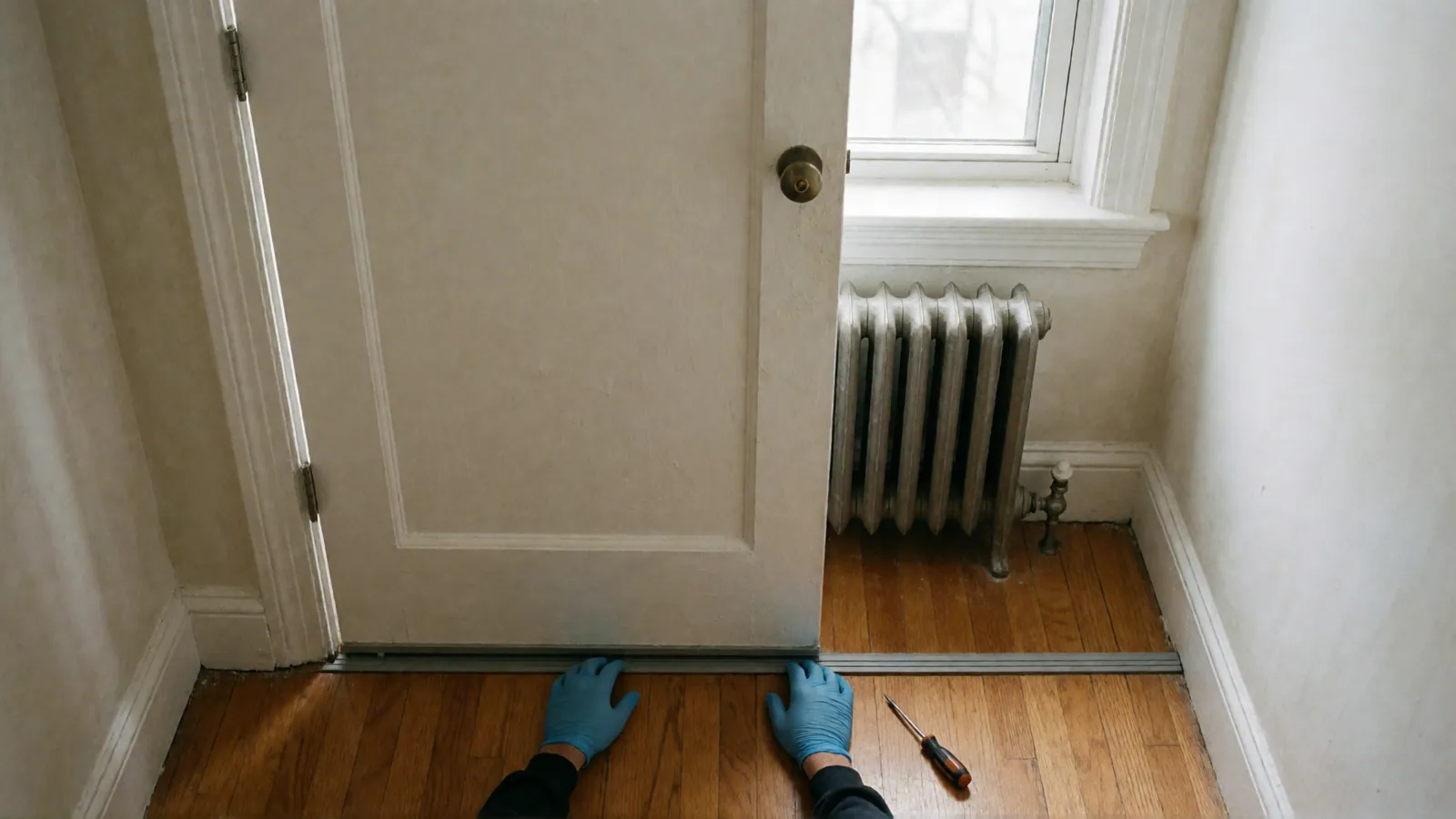
Copper mesh around a pipe, sealant along a baseboard, a sweep under the door. The way in, closed on the visit it is found.
AI-generated illustration. Not a real person, home or business.
What gets closed during a visit
Small gaps, closed with sealant, mesh and door sweeps, on the visit the technician finds them.
Small gaps, closed. During a visit we close small gaps and holes where pests get in, using sealant, mesh and door sweeps. Bigger repairs, like rebuilding a wall or replacing a door, are a job for your landlord or a licensed contractor; we'll tell you what we found.
Around the pipes under the sinks
Where a pipe comes through a wall or a cabinet floor, the hole is usually cut wider than the pipe. The gap is packed and sealed, so the pipe still moves a little and the seal doesn't crack.
Around the heating pipes
Radiator pipes run from floor to floor through every apartment in a building, and the space around each one is a road between them. Copper mesh is pushed into the gap and sealed over: mice chew through foam and soft filler, and they get nowhere with packed mesh, which doesn't rust either.
Under a door
A door to a basement, a yard or a building's hall often has a gap at the bottom that a mouse walks under without slowing down. A door sweep closes it and still lets the door shut.
Behind the stove and the dishwasher
The gas line, the water line and the drain each go into the wall through an opening of their own, behind the appliance where nobody looks. Those are closed when the appliance can be moved.
Along the baseboards
A crack where the baseboard has come away from the wall or the floor is where cockroaches live in a kitchen. Sealed, it is one less place to hide, and the bait in the cabinets is easier for them to find.
At the foundation
Outside, where the cable, the gas and the water come into the building, the gaps in the brick or the concrete around them are closed, and so is the space under a basement door.
Why it matters more than anything sprayed
A mouse fits through a gap the width of a pencil; most of the work is finding it. A gap that stays open lets the next pest in after the last one is gone, and in an apartment building the next one is close by.
So the technician reads the signs before closing anything: the dark rub marks at the edge of a hole where fur has brushed it over and over, the droppings that collect beside a way in, the gnawed edge of a baseboard. The hole that has all three is the one that is being used.
Don't seal holes yourself before we've seen them: they show us the routes. A hole filled with foam the week before the inspection hides the route, and the mice find another one.
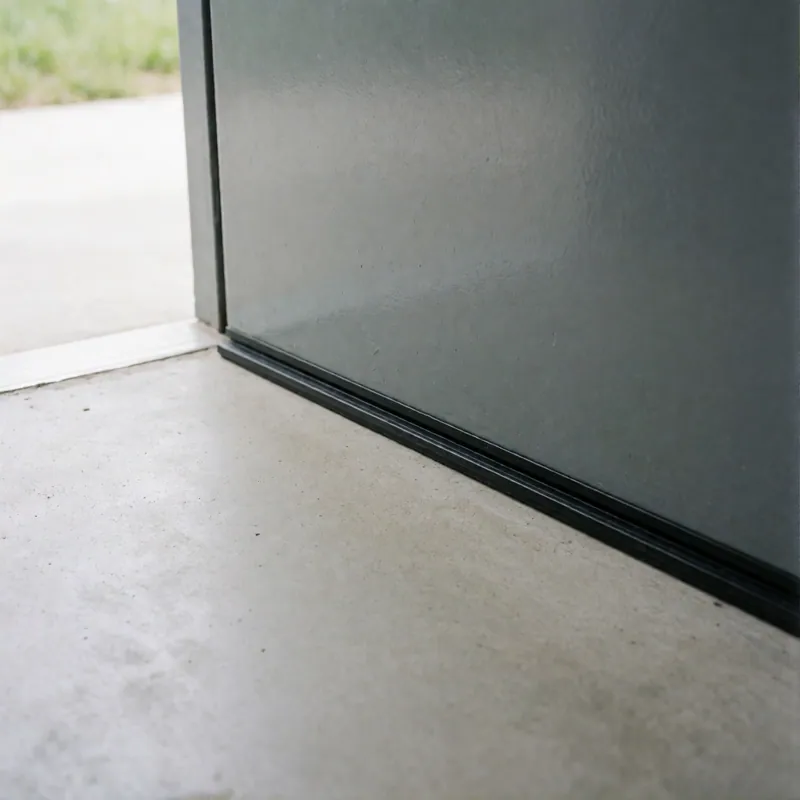 AI-generated illustration. Not a real home or business.
What is bigger than a visit
Bigger repairs, like rebuilding a wall or replacing a door, are a job for your landlord or a licensed contractor; we'll tell you what we found. A rotted sill, a hole through to the next apartment behind a cabinet, a broken basement window or a crumbling foundation wall are repairs, and they need someone with the tools and the time for them.
If you rent, those repairs are your building owner's. Tell your landlord in writing first; you can also call 311. If you rent.
The rule behind it
- N.Y.C. Admin. Code § 27-2017.8 (opens the source in a new tab) An owner treating pests seals the holes and gaps they use and fixes leaks, pesticides do not take the place of that, and any pesticide is applied by a professional the State has licensed.
Start with an inspection
Book an inspection, at least twenty-four hours ahead. There's no charge for it, and nothing has to follow it.