How the work is done
What we use, and where it goes
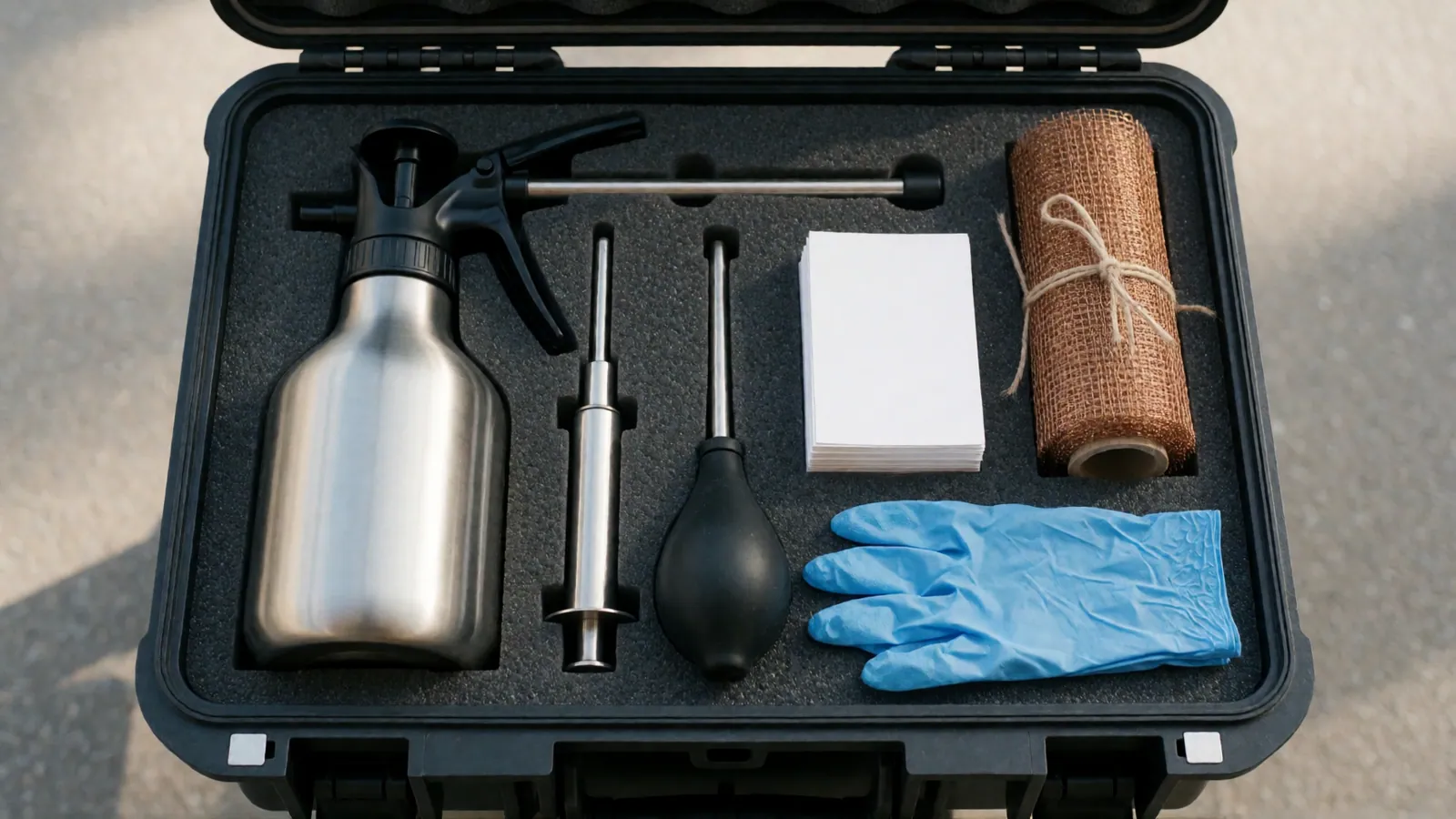
Bait in the hinge rather than a spray across the room, traps along the wall, stations at the foundation, and the gap closed. No product is named here: the label comes to you.
AI-generated illustration. Not a real home or business.
Ten methods, and where each one goes
None of them is a product name. Which ones a visit uses depends on what the inspection found, and the agreement says.
Placed, not sprayed. We use the least product that will do the job, placed where pests travel and hide rather than sprayed over rooms.
Bait
A small amount of food that carries a slow-acting product, eaten by the pest and taken back to where it lives. For cockroaches it goes in small dabs into cabinet hinges, the gap behind the stove and the hole where a pipe comes through the wall. For ants it is chosen for the kind of ant, because ants that want sugar walk past a bait made for ants that want grease. It works by being found, which is why it is left alone after the visit. Priya puts a small dab of bait in a hinge rather than a spray across a kitchen, and leaves monitors to show what changed.
Monitors
A flat card with a sticky surface, stood on its edge under a sink, beside the refrigerator or behind the toilet. It catches what walks past, and what is on it at the next visit says whether the treatment is working and which way the pests are coming. Each one is dated when it is set.
Snap traps
For mice, set along the wall where they run, because a mouse keeps to the edge of a room. The preparation list asks: tell us about children and pets in the home, so every trap and station goes inside a locked box or out of reach. They are checked and reset on each follow-up visit.
Locked bait stations
A plain black box that opens with a key, fixed against the outside of the foundation, with the bait held inside where a child, a dog or a bird can't reach it. Dariusz sets locked stations outdoors against the foundation and nowhere else.
A dust in a wall void
A fine dust puffed through a small opening into the hollow behind a wall, an outlet cover or the base of a cabinet, where cockroaches and ants live out of sight. It stays dry, behind the wall, where nobody touches it, which is the point of putting it there.
A residual treatment at the baseboards
A narrow band along the bottom of a wall, the edge of a doorframe or a crack in the floor, which keeps working after it has dried. Of everything on this page it is the one on a surface you can touch, so it is the one the stay-out time on the label matters most for. Don't wipe or mop treated baseboards and cabinet insides until we said you can.
Steam
For bed bugs: dry steam run slowly along the seams of a mattress, the joints of a bed frame and the folds of a sofa. It reaches eggs in the places where you would least want a product, like the seam you sleep on.
Vacuuming
A vacuum pulls bed bugs and their eggs off a seam and out of a crack, and droppings and shed skins out of a kitchen cabinet before bait goes in. Before a bed bug visit, the list asks the same of you: vacuum the floors and the mattress, then seal the vacuum bag or the canister's contents in a plastic bag and take it out of the building.
Encasements
A zippered cover for a mattress or a box spring, made so a bed bug can't get through it. Anything inside is shut in, and the outside is smooth and pale, so a new sign shows at once. We may recommend one at the inspection.
Sealing
During a visit we close small gaps and holes where pests get in, using sealant, mesh and door sweeps. It closes the way in, which nothing else on this list does.
What we don't use
Nothing that fills a room. We don't use foggers, bug bombs or fuel-burning heaters, and we don't fumigate or tent a building. New York City's Fire Code keeps fuel-burning heaters out of homes and puts fogging and fumigation in the hands of companies the Fire Department has approved.
Nothing on this page fills a room. A fogger reaches the pests that happen to be out in the open, which are the few, and settles on the table, the toys and the food. It also drives the rest deeper into the walls and through them into the apartment next door, which is where a cockroach or a bed bug problem goes when it is pushed.
The label, before we treat
You get the label information for each product before it is used, and you keep it.
The label comes to you. We don't name products on this website. Before we treat, we give you the label information for every product we plan to use, including its warnings, on paper or by e-mail, whichever you prefer. After each visit you get a written record of what was used, where, and for which pest.
Staying out, and for how long. Before we treat, we tell you who should stay out of treated areas and for how long, exactly as the product label says.
Asked in person. The booking form asks nothing about who lives with you. At the inspection the technician asks about children, pregnancy, breathing conditions, pets and fish, because the product label decides who should stay out of treated areas and for how long.
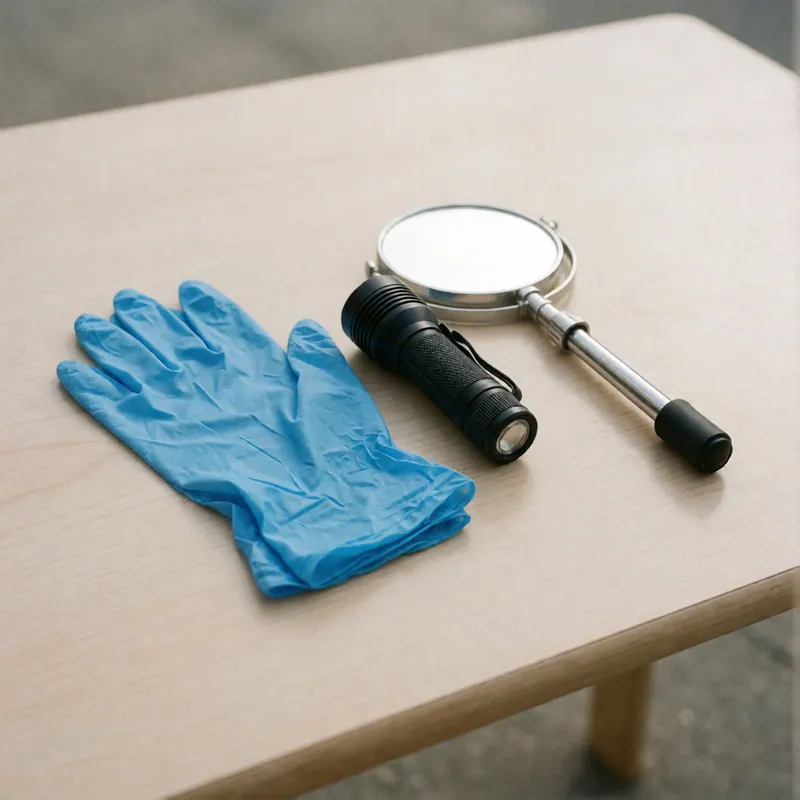 AI-generated illustration. Not a real home or business.
A name on a website tells you nothing you can use. What is useful is the label of the product a technician is about to put down in your kitchen, with its warnings, and the time it gives for staying out. That changes from one product to the next, so it is given to you for each one, before the visit's treatment starts. Why this website names no product.
After each visit, a written record
A written record. Every treatment leaves a written record: what was used, where, how much, for which pest and by whom. We keep it for three years, as New York asks of a pest control business, and you get a copy.
The record is the answer to the question people ask a week later: what did they put down, and where? It is also what a building owner shows when asked what was done in the building, and what a restaurant keeps on site. What to do after a treatment.
The rules this page follows
Each is described in a sentence of its own.
- N.Y. Environmental Conservation Law § 33-0905(5) (opens the source in a new tab) Before applying a pesticide in a home, the applicator gives the occupants the information on its label, warnings included, in the form the occupants choose.
- 6 NYCRR 325.25 (opens the source in a new tab) A pesticide business keeps a record of every application, what was used, how much, where and against what, for three years.
- 40 CFR 156.10 (opens the source in a new tab) A pesticide's labeling may not claim it is safe, nonpoisonous, harmless or nontoxic to humans and pets, even "when used as directed", or imply that the government endorses it.
Start with an inspection
Book an inspection, at least twenty-four hours ahead. There's no charge for it, and nothing has to follow it.