About
If you rent
Your building's owner is responsible for the pests in your apartment. Tell the owner in writing first; you can still book an inspection yourself.
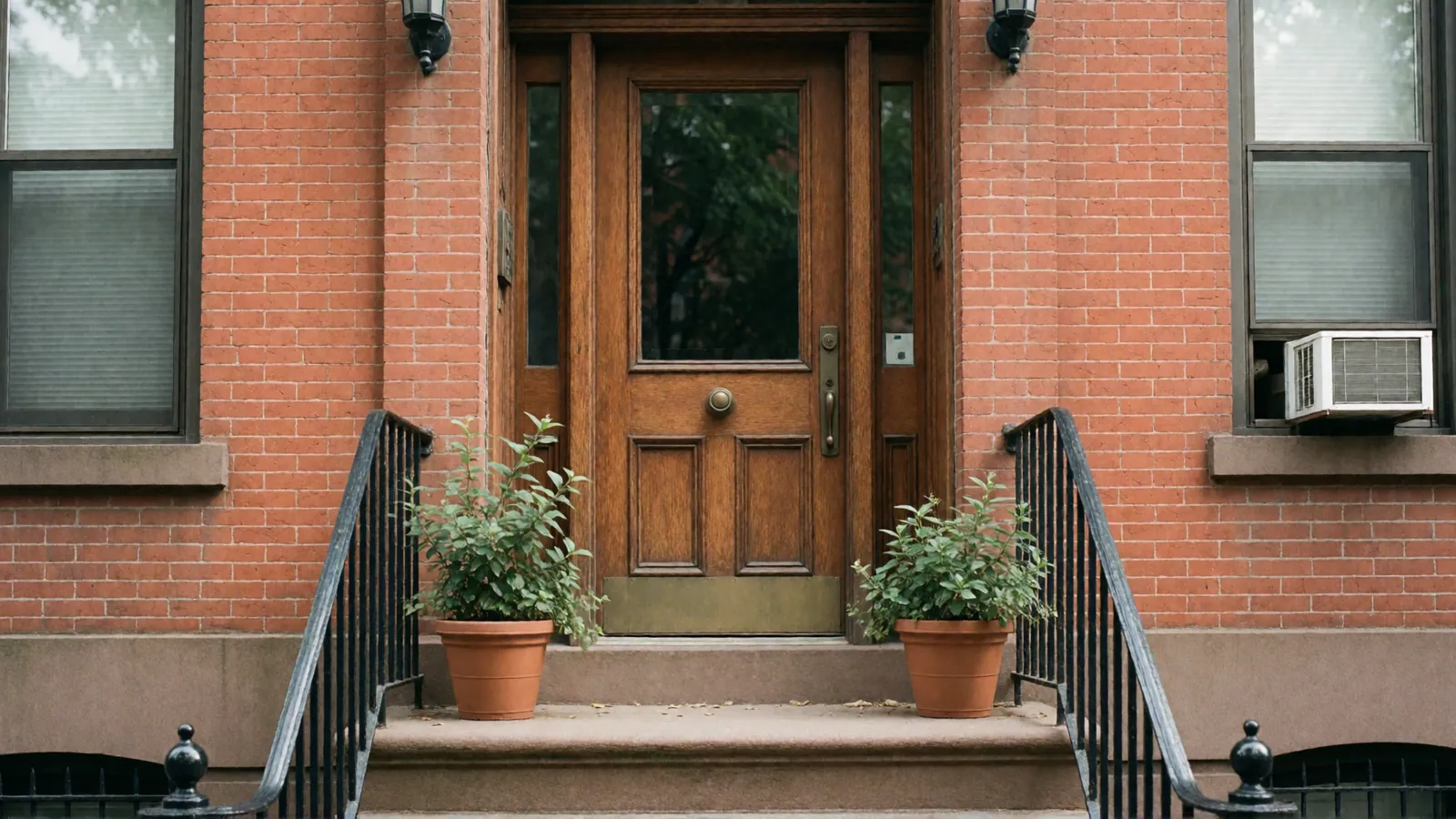
AI-generated illustration. Not a real home or business.
Your landlord's job first
If you rent. If you rent in New York City, your building's owner is responsible for keeping your apartment free of pests, bed bugs included. Tell your landlord in writing first; you can also call 311.
The City's housing code puts it on the owner: the owner of a multiple dwelling keeps the premises free from pests.
Writing to the owner first matters for two reasons. It starts a record of when the owner knew, and in an apartment building it is usually the owner who can get the apartments on either side, above and below looked at too, which is where the problem often began.
What to put in writing
Short and specific is better than long and angry.
What you have seen, and where
Droppings in the kitchen drawer, live cockroaches under the sink, dark spots on a mattress seam: what, in which room, and for how long.
What it is doing to the apartment
A cabinet you have stopped using, a bed you can't sleep in, a hole behind the stove the mice come through.
What you have done already
That food is sealed, the garbage goes out, the bedding is bagged. It shows the problem isn't one more cleaning away.
Photographs
In focus, close up, with something beside the sign for scale, and the date they were taken.
What you are asking for
An inspection and treatment by a pest control company, and to be told the date in writing.
A copy for yourself
Send it in a way you can show later, and keep the copy and any answer together.
Bed bugs, and what the owner has to tell you
When you sign a lease as a new tenant, you should be given the building's bed bug history. The City's rule is that a landlord gives a new tenant a notice of the building's bed bug history for the previous year. If yours shows bed bugs in the building last year, mention it when you write.
Separately, the owner of a multiple dwelling reports each year how many apartments had bed bugs, were treated and had them again. That count is about the building, not your apartment, and it doesn't replace telling the owner what you found.
Don't move belongings to another apartment or a friend's home. It feels like the careful thing to do, and it is how a problem in one apartment becomes a problem in two.
When the owner sends a pest control company
The owner, or the company the owner hires, needs to get into your apartment. The City's rule is that an owner gives a tenant written notice at least twenty-four hours before an inspection and a week before repairs, on weekdays between nine and five unless the tenant agrees otherwise.
Preparation matters as much when the owner books it as when you do. The preparation lists are on their own pages, and they are the same whoever pays. Preparing for a visit.
Tell your tenants first. When we inspect or treat tenants' apartments for you, the City requires you to give each tenant written notice first: twenty-four hours before an inspection, a week before work. We come on weekdays between nine and five unless the tenant agrees otherwise.
When booking us yourself makes sense
You can book an inspection whether or not you have written to your landlord.
Some tenants want to know what it is before they write: whether the spots on the seam are bed bugs, whether the sound in the wall is mice. Every job starts with an inspection. There's no charge for it, and you don't have to book anything after it. What the technician found is yours to put in your letter.
Some have written and are still waiting. If you book a course yourself, the agreement is yours, the label information comes to you, the tenant who booked us, and you have three business days after signing to change your mind, owing nothing. Whether your landlord pays you back is between you and your landlord: we can't promise it, and we don't.
Three business days to change your mind. If you agree to a course or a plan for your home after we've visited, you can cancel it until midnight of the third business day after you sign, and you'll owe nothing, even for a visit we've already made. We give you the cancellation form with the agreement, and we tell you about this right out loud.
A cockroach course for a two-bedroom apartment A tenant in Sunnyside
- A treatment, Tuesday, March 9, 2027an hour and fifteen minutes; tax $11.72$132.00
- A treatment, Tuesday, March 23, 2027forty-five minutes; tax $11.72$132.00
- A follow-up check, Tuesday, April 6, 2027forty minutes; tax $11.72$132.00
- Before taxthree visits$396.00
- Sales tax (8.875%)on each visit's invoice$35.16
- In allinvoiced visit by visit$431.16
Signed on Thursday, March 4, 2027. The three business days to cancel end at midnight on Monday, March 8, 2027, so the first visit is Tuesday, March 9, 2027, 7 am to 9 am. A return visit until Thursday, May 6, 2027 is part of the course.
The rules this page follows
Each is described in a sentence of its own.
- N.Y.C. Admin. Code § 27-2017.1 (opens the source in a new tab) The owner of a multiple dwelling keeps the premises free from pests.
- N.Y.C. Admin. Code § 27-2018.1 (opens the source in a new tab) A landlord gives a new tenant a notice of the building's bed bug history for the previous year.
- N.Y.C. Admin. Code § 27-2018.2 (opens the source in a new tab) The owner of a multiple dwelling reports each year how many apartments had bed bugs, were treated and had them again.
- 28 RCNY § 25-101 (opens the source in a new tab) An owner gives a tenant written notice at least twenty-four hours before an inspection and a week before repairs, on weekdays between nine and five unless the tenant agrees otherwise.
Start with an inspection
Book an inspection, at least twenty-four hours ahead. There's no charge for it, and nothing has to follow it.