What we treat
A termite inspection, and a written quote
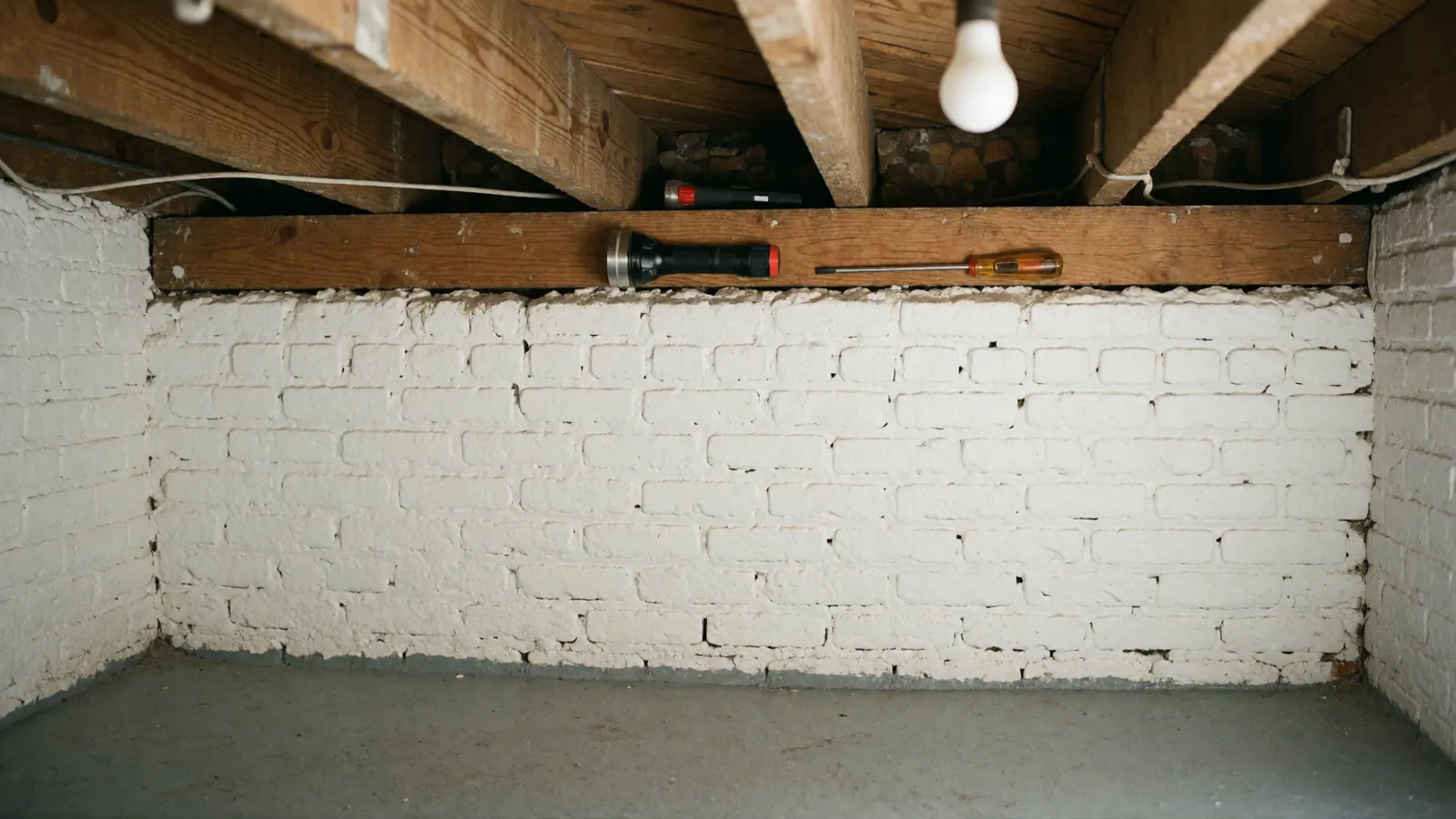
The basement, the sill and the foundation looked over, what we found in writing, and the treatment quoted by the office.
AI-generated illustration. Not a real home or business.
How termites show themselves in a Queens house
The termite in New York City is the eastern subterranean termite. It lives in the soil and reaches wood through mud tubes it builds over concrete and brick: thin brown tunnels running up a foundation wall, a pier or the side of a basement step. It eats wood from the inside, so damaged wood often looks sound until somebody presses on it.
The sign most people see is the swarm. On a warm day in spring, small dark insects with wings come out of a wall, a window frame or a crack in the basement floor, and by evening there are piles of shed wings on the sill. Winged ants swarm too. A termite has a thick waist, straight antennae and four wings of the same length; an ant has a pinched waist, bent antennae and front wings longer than the back ones.
Row houses and attached houses share foundations and walls, and the wood where the house sits on its foundation, the sill, is where termites most often reach first.
- Attached houses share foundations, so termites in one can mean a look at the next.
- We don't write termite reports for home sales or mortgages.
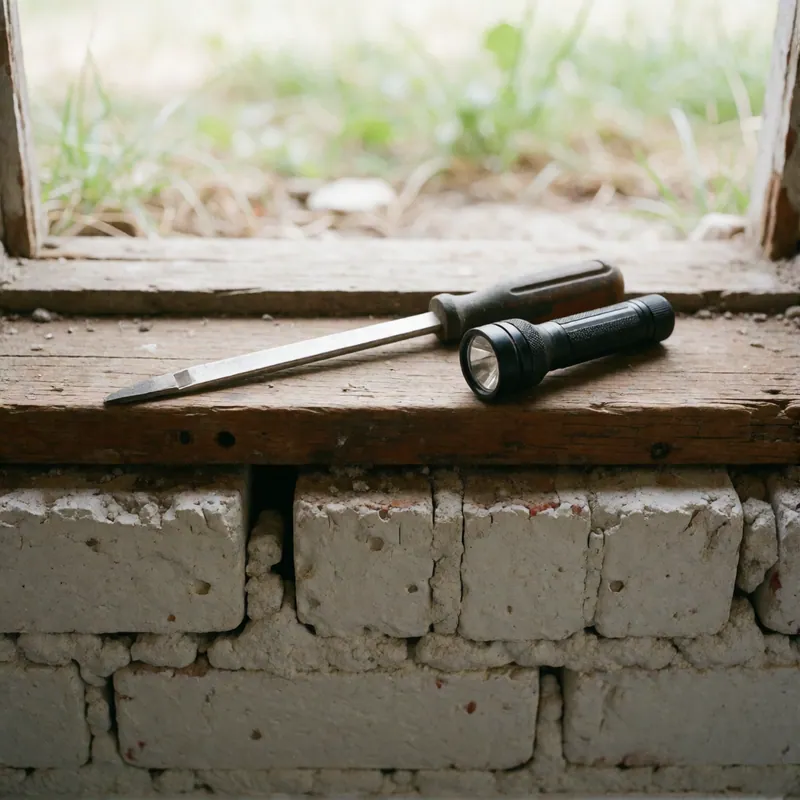 AI-generated illustration. Not a real home or business.
What the inspection looks for
A termite inspection takes about an hour and a half, inside and out. The technician walks the basement walls with a flashlight and looks at the sill, the ends of the floor joists, the bottom of the basement stairs, the wood around the boiler and the water heater, the frames of the basement windows, any wood that touches soil, the stoop, the porch and the garage, then the outside of the foundation all the way around.
Wood that sounds hollow is probed, and every mud tube, damp spot and piece of damaged wood is noted with where it is. You hear what was found before the technician leaves, and the findings come to you in writing.
Inspection first. Every job starts with an inspection. There's no charge for it, and you don't have to book anything after it.
A written quote, not a course
Termites have no course on our price list, because no two houses are treated the same way: how the house is built, what it's attached to and where the termites were found all change the work. So the office quotes the treatment in writing after the inspection, and you decide on paper.
Quoted in writing. Termite work starts with an inspection, and the office then quotes the treatment in writing, because it depends on the building. We don't write termite reports for home sales or mortgages.
What you can do yourself
Leave the mud tubes where they are. Scraping them off removes the evidence the technician needs, and the termites build another.
If you see a swarm, catch a few in a jar or take a close photograph, and keep the wings from the sill: that is what tells a termite from a winged ant.
Keep firewood, lumber, cardboard and mulch away from the foundation, and fix the leaks at the gutters and in the basement. Termites need damp soil against the house.
Before anything is applied
If a treatment follows the quote, the label information for it comes to you before anything is applied, as it does for every pest.
The label comes to you. We don't name products on this website. Before we treat, we give you the label information for every product we plan to use, including its warnings, on paper or by e-mail, whichever you prefer. After each visit you get a written record of what was used, where, and for which pest.
Termites aren't part of a monthly or quarterly plan: they're inspected, and the treatment is quoted in writing.
Book an inspection for termites
Book an inspection, at least twenty-four hours ahead. There's no charge for it, and nothing has to follow it.