Preparing for a visit
Before a termite inspection
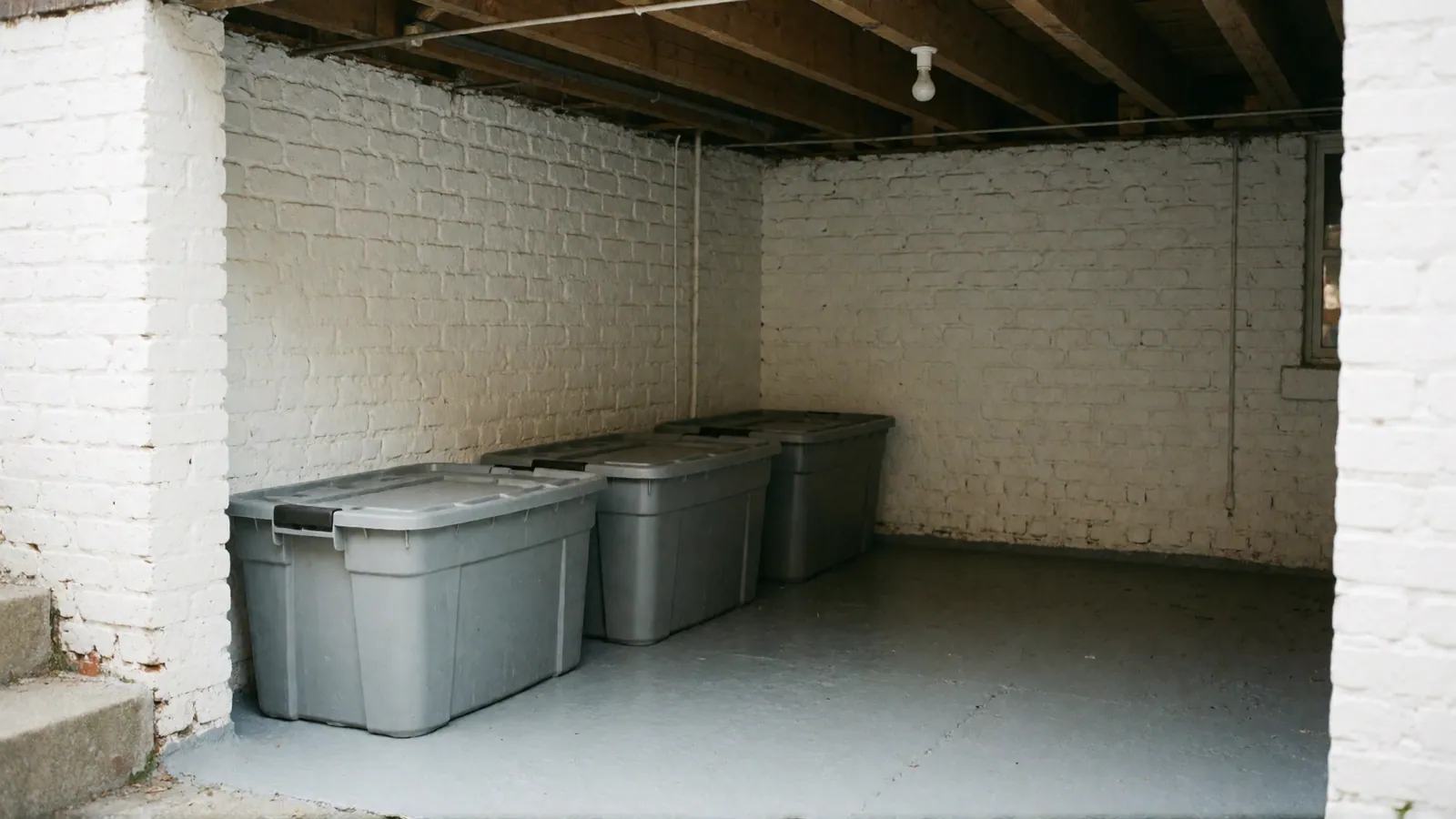
The basement walls, the boiler room and any crawl space reachable, boxes away from the foundation, and the mud tubes left as they are: getting ready for a termite inspection.
AI-generated illustration. Not a real home or business.
Why this list
A termite inspection is a close look at the wood where it meets the masonry: the sill, the ends of the joists, the bottom of the basement stairs, the frame of a basement window. Most of that is behind whatever is stored against the basement walls, so moving the boxes back is most of the preparation.
Old paperwork helps. A past treatment, when it was done and where tells the technician where to look first and what was treated before.
The list, item by item
Eight things to do. Each visit comes with its preparation list, and this is the one for termites, in full.
Clear access to the basement walls, the boiler room and any crawl space.
Move stored boxes about two feet away from the foundation walls.
Tell us where you've seen winged insects, wings on a window sill, or thin mud tubes on a wall.
Don't scrape mud tubes away: we need to see them.
Have any old termite treatment paperwork ready.
Make sure we can walk around the outside of the house.
Unlock any garage, shed or under-stair storage.
Tell us about leaks, damp spots or recent renovation work.
On the day of the inspection
The inspection takes about an hour and a half, inside and out, and nothing is applied during it. The technician tells you what was found before leaving.
The findings and the quote for any treatment follow in writing from the office, and nothing is booked until you decide.
If a treatment follows the quote, the label information comes to you before anything is applied, as it does for every pest.
Quoted in writing. Termite work starts with an inspection, and the office then quotes the treatment in writing, because it depends on the building. We don't write termite reports for home sales or mortgages.
Inspection first. Every job starts with an inspection. There's no charge for it, and you don't have to book anything after it.
The label comes to you. We don't name products on this website. Before we treat, we give you the label information for every product we plan to use, including its warnings, on paper or by e-mail, whichever you prefer. After each visit you get a written record of what was used, where, and for which pest.
Where to go next
Start with an inspection
Book an inspection, at least twenty-four hours ahead. There's no charge for it, and nothing has to follow it.