A demonstration site — this company, its technicians and its customers are not real.
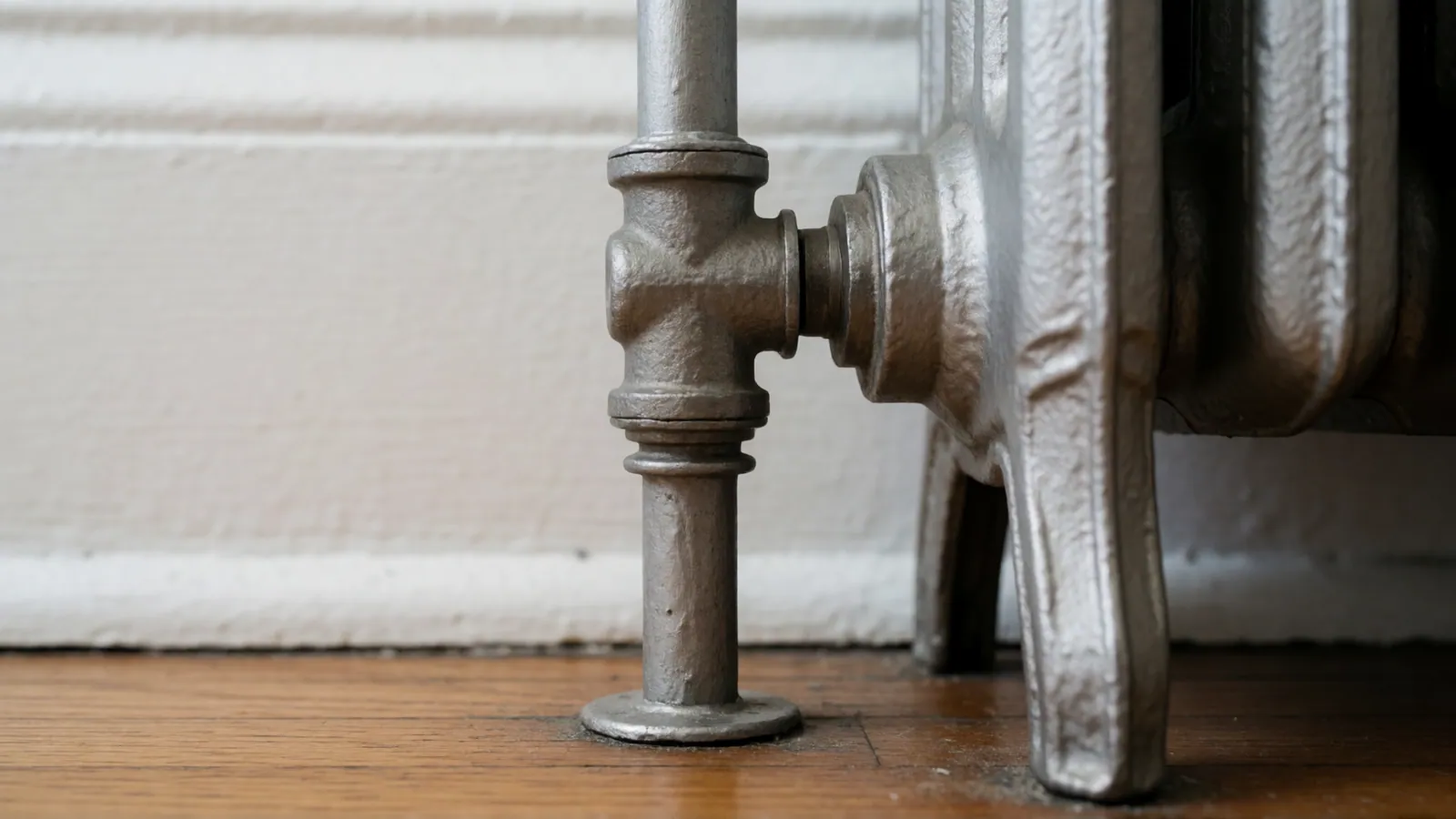
Close to the floor of a prewar apartment: a silver-painted heating pipe rising through the oak floor beside the foot of a cast-iron radiator, the kind of gap around a pipe that is checked and closed first.

What we treat

Find the way in, close it, then trap what's inside

An inspection for the way in, the small gaps closed, traps and locked stations, and two checks over three weeks.

  • A course, $297 to $396
  • Three visits

AI-generated illustration. Not a real home or business.

Mouse or rat, and how to tell

A house mouse is small enough to sit in a cupped hand. Its droppings are the size of a grain of rice, pointed at the ends, and turn up in drawers, along the back of the counter and under the sink. It lives indoors, inside the walls and in the space under the kitchen cabinets, and what you hear at night is a light scratching in short bursts.

A rat is bigger in every way: droppings like a raisin, a way in about the width of a quarter, a heavier and slower sound. In a Queens house a rat usually lives outside, under a shed, a deck or a stoop or along a fence, and comes in for food through the basement, a gap where a pipe meets the foundation, or a door that doesn't close at the bottom.

Both leave dark, greasy rub marks along the walls they run beside, and both chew: a bag of rice, the corner of a cabinet door, the insulation around a pipe. Which one it is moves the work. Mice are mostly an inside job; rats are mostly the foundation and the yard side of the basement.

  • A mouse fits through a gap the width of a pencil; most of the work is finding it.
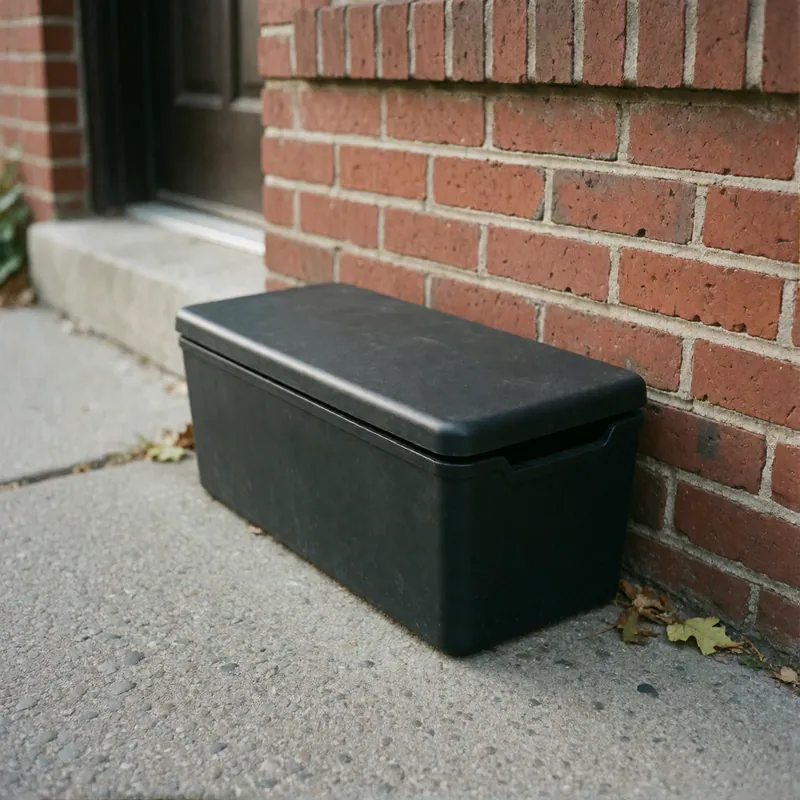
  • Outside, stations go against the foundation, locked, and nowhere else.
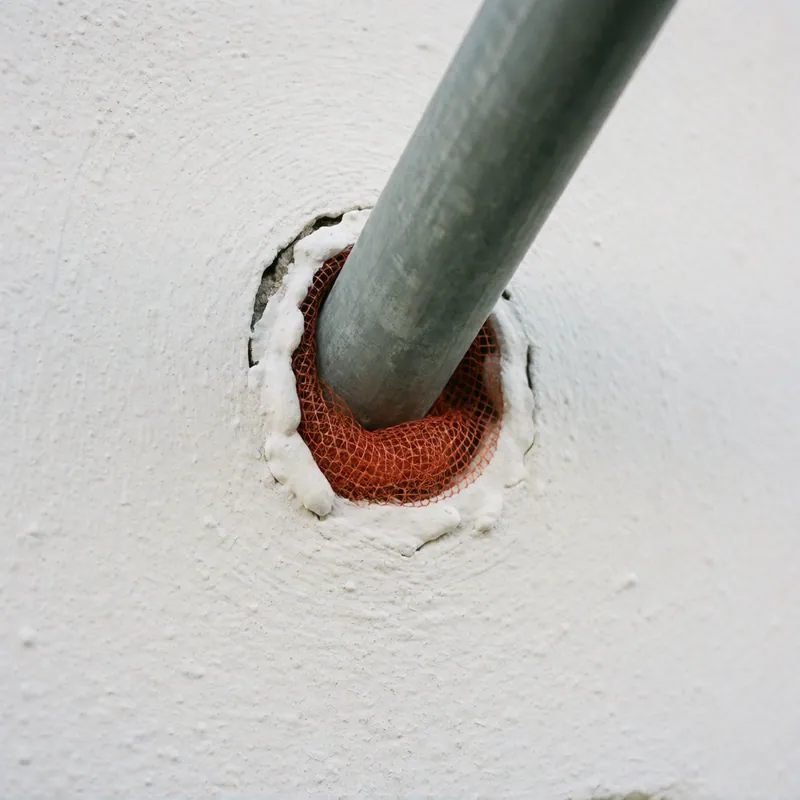
Close view of a steel pipe coming through a white plaster wall, the gap around it packed with copper-colored mesh and finished with a bead of white sealant.AI-generated illustration. Not a real home or business. A plain black lidded box set against the red-brick foundation of a house, on the concrete beside the front step.AI-generated illustration. Not a real home or business.

Most of the work is finding the way in

The technician follows the droppings and the rub marks back to a gap: around the radiator pipes, under the sinks, behind the stove where the gas line comes through the wall, behind the dishwasher, at the bottom of a basement door, where the water and gas lines enter the foundation. In a house, the outside walls are walked too.

Small gaps are closed on the first visit. A hole that needs a wall rebuilt or a door replaced is written down for whoever owns the building, with where it is.

Inspection first. Every job starts with an inspection. There's no charge for it, and you don't have to book anything after it.

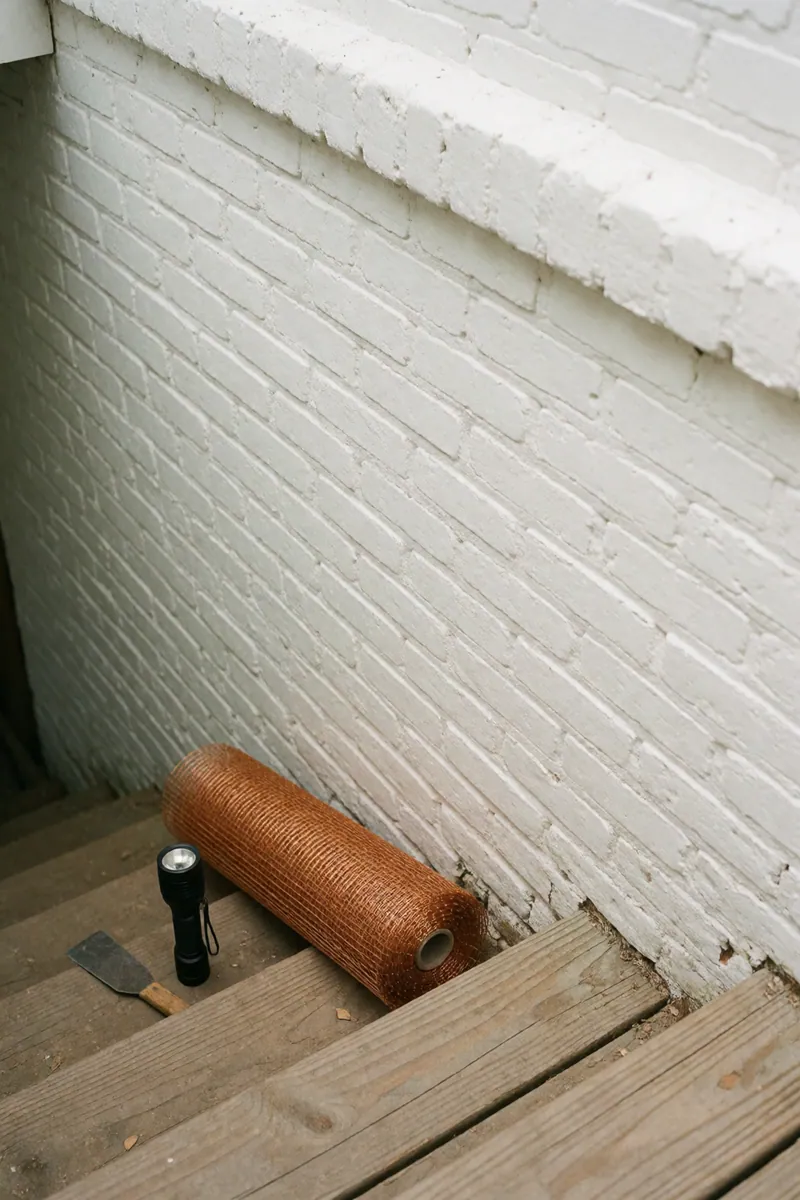
A roll of copper-colored mesh, a small black flashlight and a putty knife on the wooden steps beside a whitewashed brick wall.AI-generated illustration. Not a real home or business.

Dariusz Lambert-Osei

Technician, mice and rats

Finds the way in, closes it, and sets the traps and the stations.

Dariusz carries a roll of copper mesh, a tube of sealant and a flashlight, and uses the flashlight most.

Dariusz sets locked stations outdoors against the foundation and nowhere else.

The course, visit by visit

Three visits, and every one of them is on the agreement, with its date, its price and its tax, before you sign.

  1. The first visit: a treatment

    At least twenty-four hours after you sign, so there is time for the preparation list, and for a home after your three business days to cancel unless you ask in writing to start sooner. It takes about an hour and fifteen minutes for any apartment and an hour and a half for a house. The gaps are packed with copper mesh, pushed in tight, and sealant goes over the mesh so it can't be pulled out. Snap traps go along the walls where the droppings are, inside locked boxes wherever children or pets can reach. At a house, locked bait stations go outside against the foundation, and nowhere else.

  2. The second visit: a follow-up check

    One week after the first visit, about thirty minutes. The traps show where mice are still traveling. The technician empties and resets them, moves the ones nothing visited, and looks for fresh droppings: a new trail usually means a gap the first visit didn't find, and that gap is closed now.

  3. The third visit: a follow-up check

    Two weeks after the second visit, about thirty minutes. The last check. Traps that have stayed empty and no fresh droppings close the course with its written record; anything else, the technician tells you before leaving what happens next.

Mouse and rat course: a treatment, a follow-up check one week later and a follow-up check two weeks after that. A course's price is split into equal parts, one invoiced after each of its scheduled visits, so you never pay for a visit that hasn't happened.
The homeThe course, before taxEach of three partsTax on each part
Studio or one bedroom$297$99.00$8.79
Two bedrooms$297$99.00$8.79
Three bedrooms or more$297$99.00$8.79
A house$396$132.00$11.72

A return visit within thirty days of the last scheduled visit is part of the course.

If they come back. If pests come back between visits, telephone the office. A return visit inside a course's return period, or at any time during a plan, is part of its price.

What you can do yourself

Put dry food in hard containers. A mouse goes through a cardboard box or a plastic bag in a night: cereal, rice, flour, crackers, and pet food most of all.

Leave the holes open until the technician has seen them. They show the routes, and a hole you stuffed yourself hides where the mouse went next.

Skip the store-bought poison and the glue traps. Poison can leave a mouse to die inside a wall where nobody can reach it, and the smell lasts.

If what you hear in the ceiling or the attic is loud, runs in the daytime or rolls things around, it may be a squirrel, which is wildlife and not work we do.

A worked example, priced in full

Worked out with the same arithmetic as a real agreement: each visit's date, its share of the price and the sales tax on it. The household is invented.

A mouse and rat course for a two-family house An owner in Maspeth

  • A treatment, Tuesday, March 9, 2027an hour and a half; tax $11.72$132.00
  • A follow-up check, Tuesday, March 16, 2027thirty minutes; tax $11.72$132.00
  • A follow-up check, Tuesday, March 30, 2027thirty minutes; tax $11.72$132.00
  • Before taxthree visits$396.00
  • Sales tax (8.875%)on each visit's invoice$35.16
  • In allinvoiced visit by visit$431.16

Signed on Thursday, March 4, 2027. The three business days to cancel end at midnight on Monday, March 8, 2027, so the first visit is Tuesday, March 9, 2027, 7 am to 9 am. A return visit until Thursday, April 29, 2027 is part of the course.

Three days to cancel

Before anything is applied

What you're given before a treatment, and the lines this work doesn't cross.

Small gaps, closed. During a visit we close small gaps and holes where pests get in, using sealant, mesh and door sweeps. Bigger repairs, like rebuilding a wall or replacing a door, are a job for your landlord or a licensed contractor; we'll tell you what we found.

We stop at the foundation. Outdoors we work only around the foundation, for pests that are getting inside: a band treated at the base of the wall, locked bait stations against it, gaps sealed. We don't treat lawns, gardens, trees or shrubs, and we don't spray yards for mosquitoes or ticks.

No wildlife. We don't handle squirrels, raccoons, bats, birds (pigeons included), skunks or opossums: in New York, taking wildlife for a fee needs a State wildlife license.

The label comes to you. We don't name products on this website. Before we treat, we give you the label information for every product we plan to use, including its warnings, on paper or by e-mail, whichever you prefer. After each visit you get a written record of what was used, where, and for which pest.

A monthly or quarterly plan covers mice or rats between visits, for a home or a business that sees them often.

Book an inspection for mice and rats

Book an inspection, at least twenty-four hours ahead. There's no charge for it, and nothing has to follow it.