The journal
Mice or rats: how to tell, and why it changes the work
The droppings, the gap they use, the sound in the wall and the time of night: what each tells a technician, and why the answer moves the work from the kitchen to the foundation.
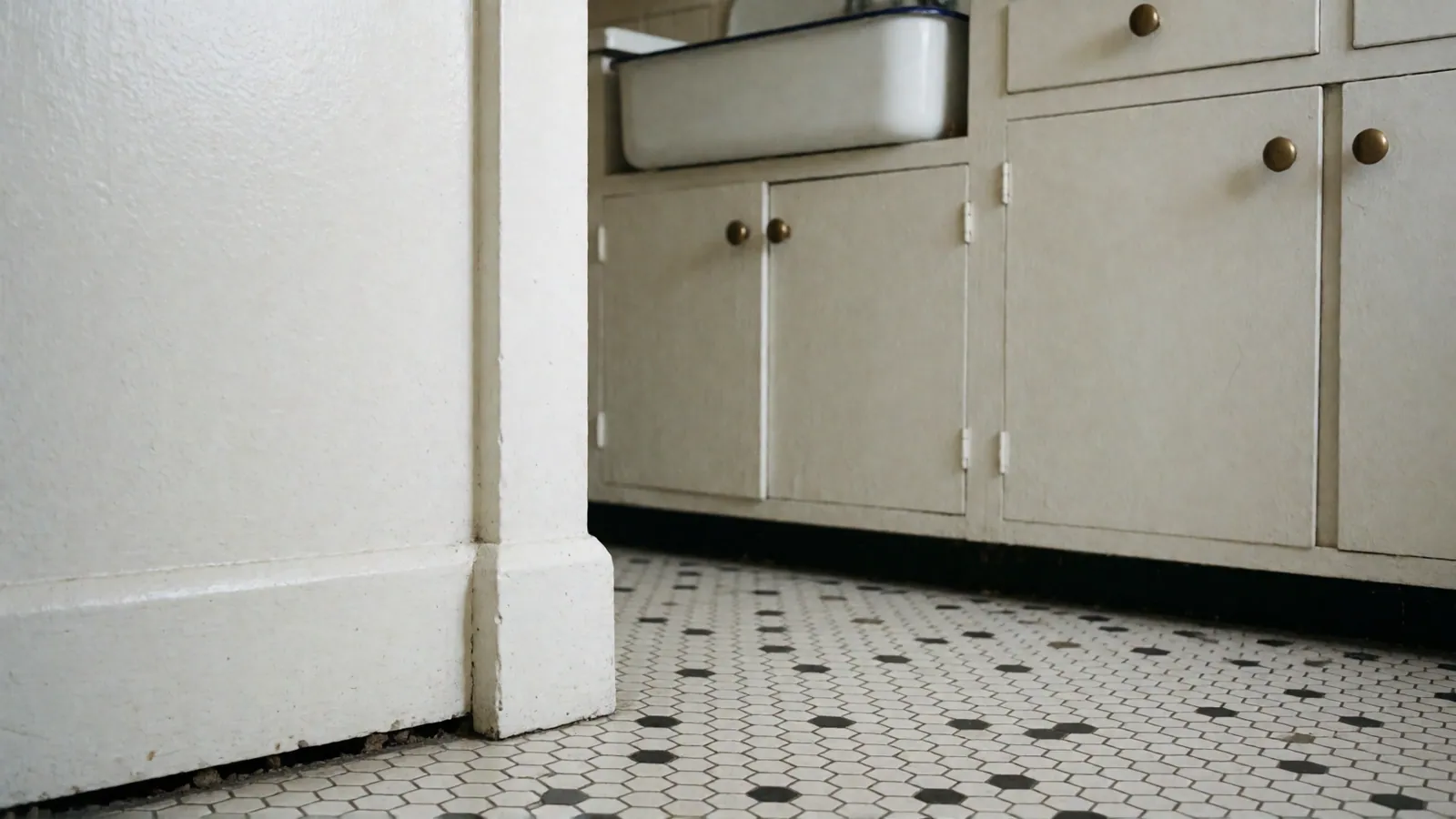
AI-generated illustration. Not a real home or business.
The first question on the telephone is usually whether it is a mouse or a rat, and the honest answer is that the person calling often can't tell yet. The signs are different enough, though, that by the end of an inspection the technician can say which it is, and the answer matters. A mouse is usually a problem inside the walls of a kitchen. A rat is usually a problem at the foundation. The work follows the animal.
The droppings
Droppings are the most useful sign, because they are left exactly where the animal travels. Mouse droppings are small and dark, about the size of a grain of rice, pointed at the ends, and scattered: along the back of a counter, in a kitchen drawer, under the sink, in the corner of a cabinet. A mouse leaves them as it goes.
Rat droppings are much bigger, closer to a raisin or an olive pit, blunt at the ends, and usually found in groups in fewer places: along a basement wall, behind the boiler, beside the garbage. Fresh droppings are soft and shiny; old ones are dull and crumble. Leave them where they are until the inspection, so the technician can read them.
Telephone us if you smell something dead, and don't handle a dead mouse or rat with bare hands.
The way in
A mouse fits through a gap the width of a pencil; most of the work is finding it. That is why a house that looks sealed tight to the person living in it still has mice: the gap is behind the stove, around the radiator pipe, under the bottom cabinet, where the gas line goes into the wall.
A rat needs a bigger opening, about the size of a quarter, so rats come in where something is broken: a gap under a basement door, a crack in the foundation, a space around a pipe where the mortar has crumbled, a drain. Mice live inside the building, in the hollow of a wall or along the heating pipes that run floor to floor. The rat that turns up in a Queens house or a building's basement is almost always the brown rat, which digs. It lives in burrows in the soil beside a foundation, under a slab or at the edge of a yard, and comes inside for food.
The sound, and the time of night
Mice are light. What you hear is a soft scratching or a patter inside a wall or above a ceiling, mostly after the household has gone to bed, and often in the same few feet of wall night after night. Rats are heavier, and you hear the weight: gnawing, a thump, something being dragged.
A sound in the walls of an upper-floor apartment is far more often mice. A sound in a basement, under the floor of a house with a yard, or at the garbage cans after dark is worth checking for rats.
The other signs
Rub marks
A dark, greasy smear along a baseboard or at the edge of a hole, where fur has brushed the same spot over and over. A rat's are broader and darker than a mouse's.
Gnawing
Small, neat tooth marks on a food package or the corner of a box for a mouse; rougher, bigger marks on wood, plastic or a soft pipe for a rat.
Burrows
Outside, a rat burrow is a hole about the width of a fist in the soil against a wall or under a slab, with the earth around the opening packed smooth. Mice don't dig them.
Nests
Shredded paper, fabric or insulation in a quiet corner: the back of a drawer, behind an appliance, a box in the basement that hasn't been moved in a year.
Why it changes the work
For mice, the work is inside. The technician follows the droppings to the gap they lead to, closes the small ones with copper mesh and sealant, and sets snap traps along the walls where the mice run, inside a locked box wherever a child or a pet could reach. Dariusz carries a roll of copper mesh, a tube of sealant and a flashlight, and uses the flashlight most. The follow-up checks show whether the traps are still catching, and whether a new sign has turned up somewhere else, which usually means a second way in.
For rats, the work starts outside. The technician walks the foundation looking for burrows and gaps, and sets locked stations against the building. Outdoors we work only around the foundation, for pests that are getting inside: a band treated at the base of the wall, locked bait stations against it, gaps sealed. Inside, the basement door, the drains and the pipes through the foundation wall are checked and closed where a visit can close them. Bigger repairs, like rebuilding a wall or replacing a door, are a job for your landlord or a licensed contractor; we'll tell you what we found.
Sometimes it is both: mice in the kitchen and rats at the garbage cans of the same house. The course is the same either way, and the table shows its visits and its prices.
| The home | The course, before tax | Each of three parts | Tax on each part |
|---|---|---|---|
| Studio or one bedroom | $297 | $99.00 | $8.79 |
| Two bedrooms | $297 | $99.00 | $8.79 |
| Three bedrooms or more | $297 | $99.00 | $8.79 |
| A house | $396 | $132.00 | $11.72 |
Small gaps, closed. During a visit we close small gaps and holes where pests get in, using sealant, mesh and door sweeps. Bigger repairs, like rebuilding a wall or replacing a door, are a job for your landlord or a licensed contractor; we'll tell you what we found.
Before the technician comes
The preparation list for mice and rats is short. Two lines on it matter more than the rest:
- Don't seal holes yourself before we've seen them: they show us the routes.
- Don't use store-bought poison or glue traps alongside our course.
We stop at the foundation. Outdoors we work only around the foundation, for pests that are getting inside: a band treated at the base of the wall, locked bait stations against it, gaps sealed. We don't treat lawns, gardens, trees or shrubs, and we don't spray yards for mosquitoes or ticks.
More from the journal
- Why cockroach bait takes two weeks, and why you see more of them first
- The signs of bed bugs, and what to do before you call anyone
- Bed bugs when you rent in New York City
- How much does pest control cost in Queens?
- Why a spray is not a plan
- What to ask a pest control company before it treats your home
Start with an inspection
Book an inspection, at least twenty-four hours ahead. There's no charge for it, and nothing has to follow it.