The journal
The signs of bed bugs, and what to do before you call anyone
Dark spots on a seam, shed skins, a sweet smell in a bad case: where to look with a flashlight, what not to throw out, and why you shouldn't sleep on the sofa.
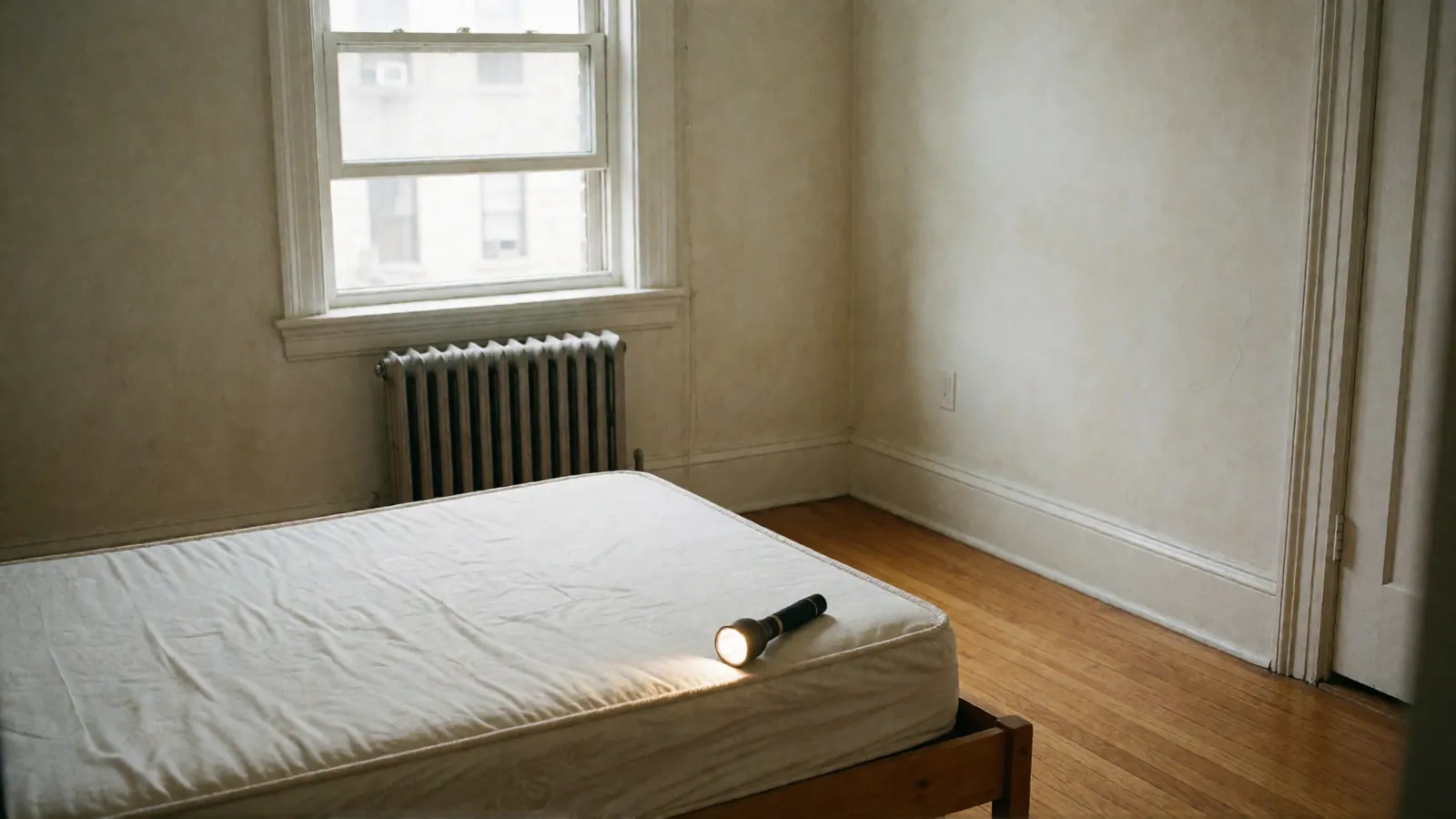
AI-generated illustration. Not a real home or business.
Bed bugs are usually noticed by someone who has been bitten, and bites are the weakest evidence there is. People react to them differently: some get a line of itchy welts, some get nothing at all, and a mosquito, a flea or a rash can look the same. What tells you it is bed bugs is what they leave behind, and you can look for that yourself, with a flashlight, before you call anyone.
Where to look
Start at the bed, because that is where they live: within a few feet of where someone sleeps. Strip the sheets and look along the seams and the piping of the mattress, under the label, at the corners of the box spring, and into the joints of the bed frame and the headboard, especially where wood meets wood or a screw goes in.
Then move outward: the nightstand and its drawer, the edge of the carpet beside the bed, the baseboard behind the headboard, the seams and cushions of a sofa if anyone sleeps on it, and the backs of picture frames and outlet covers near the bed. A flashlight held low, almost flat against the surface, shows what a ceiling light hides. The edge of a stiff card run along a seam brings out what is tucked into it.
What you're looking for
Dark spots
Small black or rust-brown dots, like the tip of a felt marker pressed into fabric, often in clusters along a seam. They are digested blood, and a damp cloth makes one smear. This is the sign most people find first.
Shed skins
Pale, empty, see-through shells in the shape of the bug, left behind as the young grow. Several sizes in one place means they have been there a while.
Eggs
Tiny and pearly white, about the size of a pinhead, stuck into a crevice. Hard to see without the flashlight and a close look.
The bugs themselves
Flat, oval and brown, about the size and color of an apple seed when grown, rounder and redder after feeding; the young are smaller and paler. They move away from light.
Small stains on the sheets
Rusty spots where a bug was crushed in the night after it fed.
A smell, in a bad case
A sweetish, musty smell in a room with a great many bugs. Most homes never get there before someone calls.
What not to do
Don't throw the mattress out. Don't throw furniture out until we've seen it. If you must, wrap it in plastic and mark it so nobody takes it home. A mattress carried down a stairwell sheds bugs on every landing, and a new one on the same frame has them again within weeks.
Don't move to the sofa. It feels like the answer, and it spreads the problem: the bugs follow the sleeper, and now there are two places to treat instead of one.
Keep your belongings at home. Don't move belongings to another apartment or a friend's home. Bags of clothes carried to someone else's apartment carry the bed bugs with them.
Don't set off a fogger or spray the bed. Don't use store-bought sprays or foggers before or between our visits. A fogger drives bed bugs into the walls and the apartments around you, and makes them harder to reach on the day of the treatment.
Nothing that fills a room. We don't use foggers, bug bombs or fuel-burning heaters, and we don't fumigate or tent a building. New York City's Fire Code keeps fuel-burning heaters out of homes and puts fogging and fumigation in the hands of companies the Fire Department has approved.
What to do instead
Keep sleeping in your own bed. Write down where you found what, and take photographs in focus, close up, with something beside the sign for scale. Start the laundry the way the preparation list asks, because it is the first item on it and the one that takes longest:
Strip all beds. Put sheets, pillowcases, blankets and mattress pads into plastic bags in the bedroom, tie them shut, then wash and dry them on the hottest settings.
Then book an inspection. The technician confirms what it is, checks the rooms around the bed, and the office writes the course down before anything starts: a treatment, a second treatment two weeks later and a follow-up check two weeks after that, priced by the size of the home.
Until two checks find nothing. Bed bugs usually take more than one visit. The course is a treatment, a second treatment two weeks later and a follow-up check two weeks after that, and we return until two checks in a row find no sign, within 120 days of the first treatment, as part of the course price.
The preparation list
This is the list the confirmation e-mail sends, item by item. The laundry is half the work, and a treatment on an unprepared room reaches a fraction of what it should.
Strip all beds. Put sheets, pillowcases, blankets and mattress pads into plastic bags in the bedroom, tie them shut, then wash and dry them on the hottest settings.
Bag all clothes from drawers, closets and the floor the same way. Wash and dry them on high heat, or dry them on high for at least thirty minutes if they can't be washed.
Keep clean laundry in new, sealed bags, and don't unpack it until after the second treatment.
Empty dressers and nightstands, and leave the drawers in place so they can be treated.
Clear everything from under the beds and from closet floors.
Pull beds, sofas and dressers about eighteen inches away from the walls.
Leave the mattress and box spring on the bed frame, uncovered, so the seams can be reached.
Unplug lamps, chargers and electronics near the bed and move them away from the wall.
Vacuum the floors and the mattress, then seal the vacuum bag or the canister's contents in a plastic bag and take it out of the building.
Don't throw furniture out until we've seen it. If you must, wrap it in plastic and mark it so nobody takes it home.
Don't move belongings to another apartment or a friend's home.
Take pets out of the home and cover fish tanks, with the pump off, before we arrive.
Plan to be out of the home for the time we give you, which comes from the product label.
Don't use store-bought sprays or foggers before or between our visits.
If you rent. If you rent in New York City, your building's owner is responsible for keeping your apartment free of pests, bed bugs included. Tell your landlord in writing first; you can also call 311.
More from the journal
Start with an inspection
Book an inspection, at least twenty-four hours ahead. There's no charge for it, and nothing has to follow it.