Preparing for a visit
Before a bed bug treatment
Bagged and hot-washed laundry, cleared floors, furniture away from the walls and the beds stripped but left in place: the list, item by item, and why the laundry matters most.
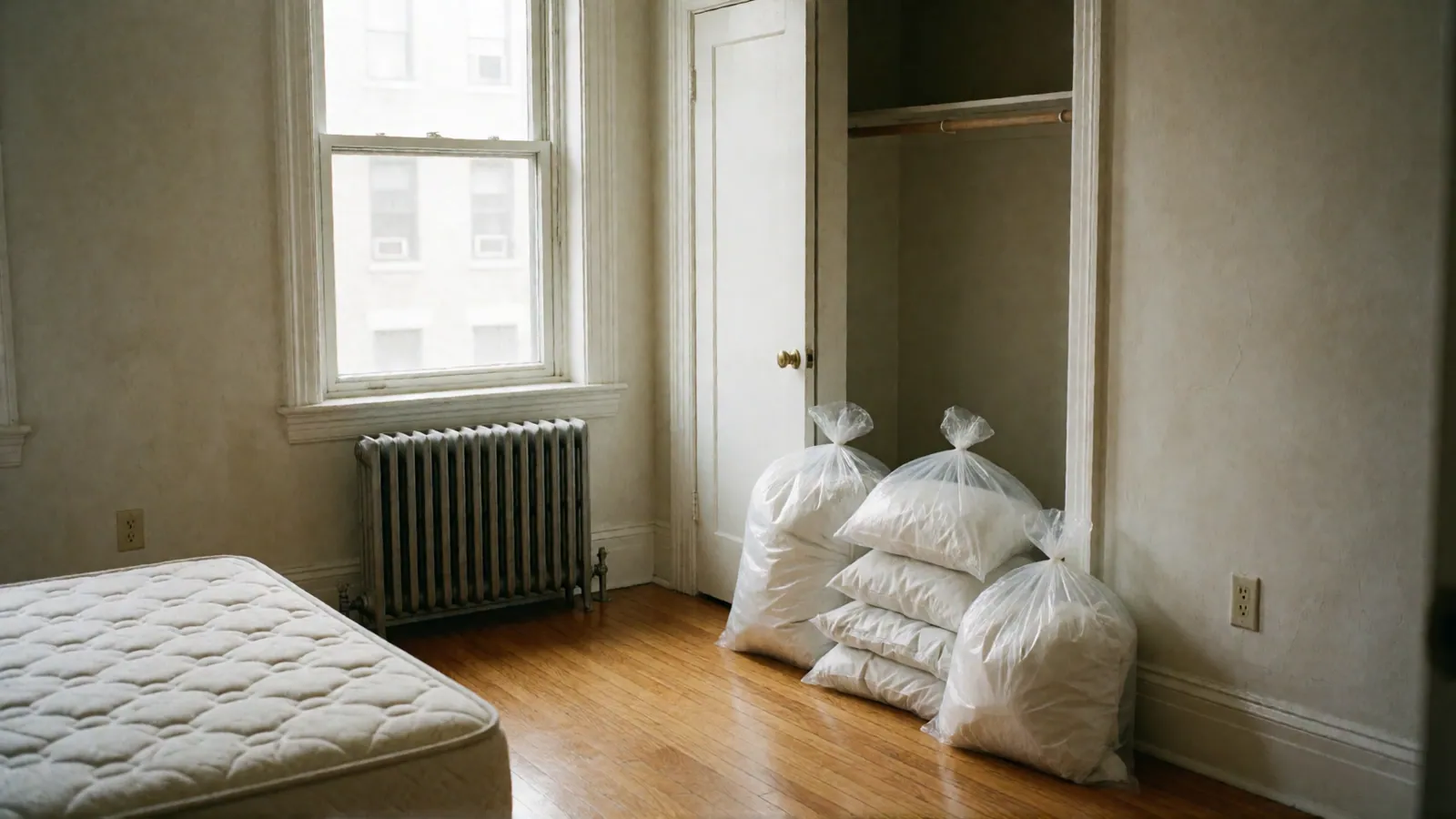
AI-generated illustration. Not a real home or business.
Why this list
Bed bugs hide in what is close to the bed: the sheets, the clothes on a chair, a pile on the closet floor, whatever is in the nightstand drawer. Everything that can go through a hot dryer is taken out of their reach that way, and everything left in the room is moved so the technician can get to the seams, the frame and the baseboard behind it.
Start early. The laundry for one bedroom is several loads, which is why a bed bug course's first visit is at least 72 hours after you sign. The bags stay in the room until they go to the machine, so nothing is carried through the home open.
The list, item by item
Fourteen things to do. Each visit comes with its preparation list, and this is the one for bed bugs, in full.
Strip all beds. Put sheets, pillowcases, blankets and mattress pads into plastic bags in the bedroom, tie them shut, then wash and dry them on the hottest settings.
Bag all clothes from drawers, closets and the floor the same way. Wash and dry them on high heat, or dry them on high for at least thirty minutes if they can't be washed.
Keep clean laundry in new, sealed bags, and don't unpack it until after the second treatment.
Empty dressers and nightstands, and leave the drawers in place so they can be treated.
Clear everything from under the beds and from closet floors.
Pull beds, sofas and dressers about eighteen inches away from the walls.
Leave the mattress and box spring on the bed frame, uncovered, so the seams can be reached.
Unplug lamps, chargers and electronics near the bed and move them away from the wall.
Vacuum the floors and the mattress, then seal the vacuum bag or the canister's contents in a plastic bag and take it out of the building.
Don't throw furniture out until we've seen it. If you must, wrap it in plastic and mark it so nobody takes it home.
Don't move belongings to another apartment or a friend's home.
Take pets out of the home and cover fish tanks, with the pump off, before we arrive.
Plan to be out of the home for the time we give you, which comes from the product label.
Don't use store-bought sprays or foggers before or between our visits.
On the day
The first treatment takes about two and a half hours for a studio or one-bedroom, three and a half hours for a two-bedroom and four and a half hours for three bedrooms or more and for a house. Before the treatment begins, the technician tells you who should stay out of the home and for how long, which comes from the product label, so plan somewhere to be for that time, with your pets.
When you come back, leave the beds and the furniture where the technician left them, away from the walls, and keep the clean laundry in its sealed bags. The second visit, a treatment, is two weeks later, and the bags stay closed until after it.
Staying out, and for how long. Before we treat, we tell you who should stay out of treated areas and for how long, exactly as the product label says.
The label comes to you. We don't name products on this website. Before we treat, we give you the label information for every product we plan to use, including its warnings, on paper or by e-mail, whichever you prefer. After each visit you get a written record of what was used, where, and for which pest.
Nothing that fills a room. We don't use foggers, bug bombs or fuel-burning heaters, and we don't fumigate or tent a building. New York City's Fire Code keeps fuel-burning heaters out of homes and puts fogging and fumigation in the hands of companies the Fire Department has approved.
Where to go next
Start with an inspection
Book an inspection, at least twenty-four hours ahead. There's no charge for it, and nothing has to follow it.