About
Where we work in Queens
Woodside, Sunnyside, Jackson Heights, Elmhurst, Astoria, Long Island City, Maspeth, Corona, East Elmhurst, Middle Village and Ridgewood, by ZIP code, from an office in Woodside.
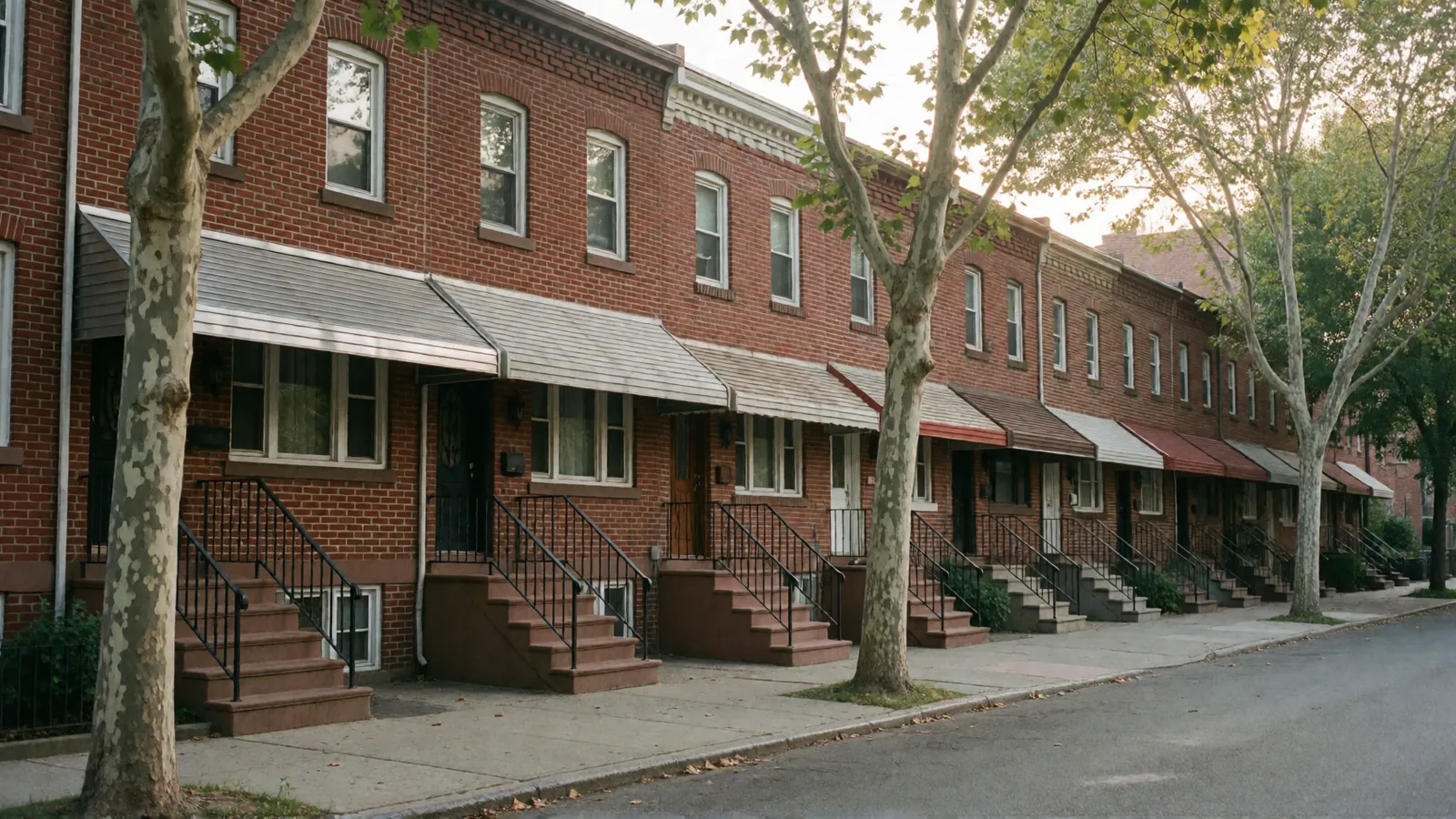
AI-generated illustration. Not a real home or business.
Eleven neighborhoods in Western Queens
The booking form reads the ZIP code first, and offers a day and a window for an address on this table and no other.
| Neighborhood | ZIP codes |
|---|---|
| Woodside | 11377 |
| Sunnyside | 11104 |
| Jackson Heights | 11372 |
| Elmhurst | 11373 |
| Astoria | 11102, 11103, 11105, 11106 |
| Long Island City | 11101, 11109 |
| Maspeth | 11378 |
| Corona | 11368 |
| East Elmhurst | 11369, 11370 |
| Middle Village | 11379 |
| Ridgewood | 11385 |
Every visit is at your address, from the office on 61st Street in Woodside. If you were looking for an exterminator in Woodside, Queens, or in any of the neighborhoods around it, this is the area the technicians cover. For a building of more than twelve apartments, telephone the office: a building that size is planned with its owner, not booked online.
The neighborhoods, and what their buildings ask of us
The houses and buildings of each neighborhood decide where an inspection starts.
Woodside, 11377
Where the office is. Prewar walk-ups and elevator buildings along the avenues, brick row houses on the side streets, and small restaurants under the elevated train on Roosevelt Avenue. Apartments that share walls share their cockroaches, so a kitchen here is looked at with the next one in mind.
Sunnyside, 11104
Garden apartments and co-ops built around shared courtyards, and apartment buildings along Queens Boulevard. In a co-op the owner of the apartment and the building's board each have a part of the work, and the inspection says which part is whose.
Jackson Heights, 11372
Large prewar co-op buildings with interior gardens, attached houses, and a long run of restaurants and food shops. Old buildings have old pipe chases, and the space around a heating pipe is the first thing checked.
Elmhurst, 11373
Apartment buildings and attached houses close together, with shared basements, trash rooms and alleys. A building's monthly round here starts in the basement and the trash room.
Astoria, 11102, 11103, 11105 and 11106
Two-family houses with yards, walk-up apartment buildings and a long line of restaurants. A yard means the foundation is walked, outside, for burrows and gaps, as well as the kitchen inside.
Long Island City, 11101 and 11109
Older row houses, offices, studios and warehouses, and new apartment towers by the water. A tower is planned with the office rather than booked here.
Maspeth, 11378
Detached and semi-attached frame houses, and light industry. A frame house has wood close to the soil, so the sill and the basement are where a termite inspection starts.
Corona, 11368
Attached houses and small apartment buildings, many homes shared by more than one family. Every household in a house hears what was found, because a kitchen on one floor and a kitchen on the next share pipes.
East Elmhurst, 11369 and 11370
Brick one- and two-family houses with yards and driveways. Most work starts at the outside wall, where the garbage cans stand.
Middle Village, 11379
Detached and attached houses with gardens, next to large cemeteries and parks. Gardens are left alone: the work stops at the foundation.
Ridgewood, 11385
Brick row houses built in long matching blocks, many of them two- and three-family. Row houses share walls and foundations, so a sign in one is often a reason to look at the next.
Attached houses share foundations, so termites in one can mean a look at the next. Outdoors we work only around the foundation, for pests that are getting inside: a band treated at the base of the wall, locked bait stations against it, gaps sealed.
When we come
| Day | Arrival windows |
|---|---|
| Monday | 7 am to 9 am, 9 am to 11 am, 11 am to 1 pm, 1 pm to 3 pm and 3 pm to 5 pm |
| Tuesday | 7 am to 9 am, 9 am to 11 am, 11 am to 1 pm, 1 pm to 3 pm and 3 pm to 5 pm |
| Wednesday | 7 am to 9 am, 9 am to 11 am, 11 am to 1 pm, 1 pm to 3 pm and 3 pm to 5 pm |
| Thursday | 7 am to 9 am, 9 am to 11 am, 11 am to 1 pm, 1 pm to 3 pm and 3 pm to 5 pm |
| Friday | 7 am to 9 am, 9 am to 11 am, 11 am to 1 pm, 1 pm to 3 pm and 3 pm to 5 pm |
| Saturday | 8 am to 10 am, 10 am to noon and noon to 1 pm |
| Sunday | No visits |
Time between stops. We leave half an hour between stops, for parking and stairs, so a technician running long at one apartment doesn't make the next one wait.
Monthly, and early. New York City's Health Code asks a restaurant to keep a contract for at least monthly preventive pest control, and to keep the visit records on site. So our food-business plan is monthly, and we visit early, before any food is prepared or served.
On a Saturday morning, Teodoro and Priya are working. In tenants' apartments booked by a building owner the hours are narrower, because the tenants have to be told first. We come on weekdays between nine and five unless the tenant agrees otherwise.
Where we don't work
Places we don't work. We don't work on City-owned or City-leased property, in NYCHA buildings, in parks, or in schools, day care centers, hospitals or nursing homes. Those have their own pest control rules and their own contractors.
We don't work on Sundays, or outside the ZIP codes on this page. An address outside the table is for the telephone.
Start with an inspection
Book an inspection, at least twenty-four hours ahead. There's no charge for it, and nothing has to follow it.