A demonstration site — this company, its technicians and its customers are not real.
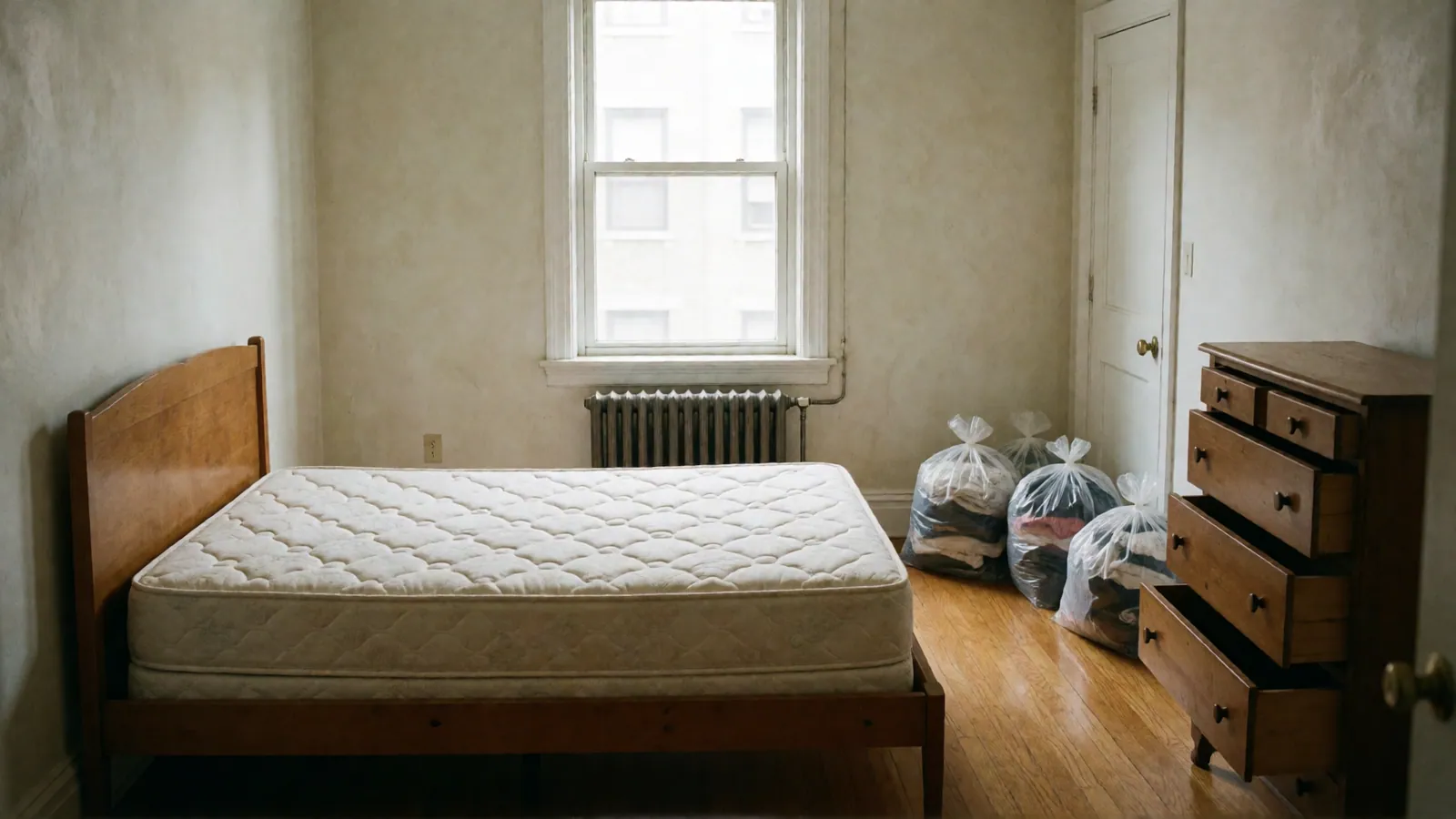
A small bedroom made ready for a visit: a bare mattress on a wooden bed pulled away from the wall, tied clear bags of laundry by the door and the drawers of a dresser standing open and empty.

What we treat

Bed bugs take more than one visit, and we say how many before we start

An inspection, a preparation list, two treatments two weeks apart and a check, and return visits until two checks in a row find nothing.

  • A course, $597 to $996
  • Three visits

AI-generated illustration. Not a real home or business.

What a bed bug is, and where the signs are

A grown bed bug is flat, oval and reddish-brown, about the size of an apple seed; the young ones are smaller and paler, close to see-through before they feed. It doesn't fly or jump. It walks out at night from wherever it hides to whoever is asleep, and back again, which is why it lives close to a bed, or to the end of a sofa somebody naps on.

The surest signs are on the mattress and the box spring: small dark spots along the seams, like the dot of a felt-tip pen, which are digested blood; pale, empty shed skins; and eggs no bigger than a pinhead, stuck in the folds. Look along the piping of the mattress, the corners of the box spring, the joints of the bed frame and the screw holes of the headboard. A case that has run for a long time has a sweetish, musty smell.

Bites are a poor sign on their own. Some people don't react to them at all, and other insects and plenty of skin conditions leave the same red marks. A bug caught on a piece of tape, or a sharp photograph of one, tells the technician more than any number of bites.

In a building, bed bugs arrive in furniture, luggage and laundry bags, and move between apartments along pipes and wiring. That's why it matters whether the neighbors have seen them, and why a mattress or a sofa left on the sidewalk should stay there.

  • Every course starts with the preparation list: the laundry is half the work.
  • No foggers, no bug bombs, no fuel-burning heaters.
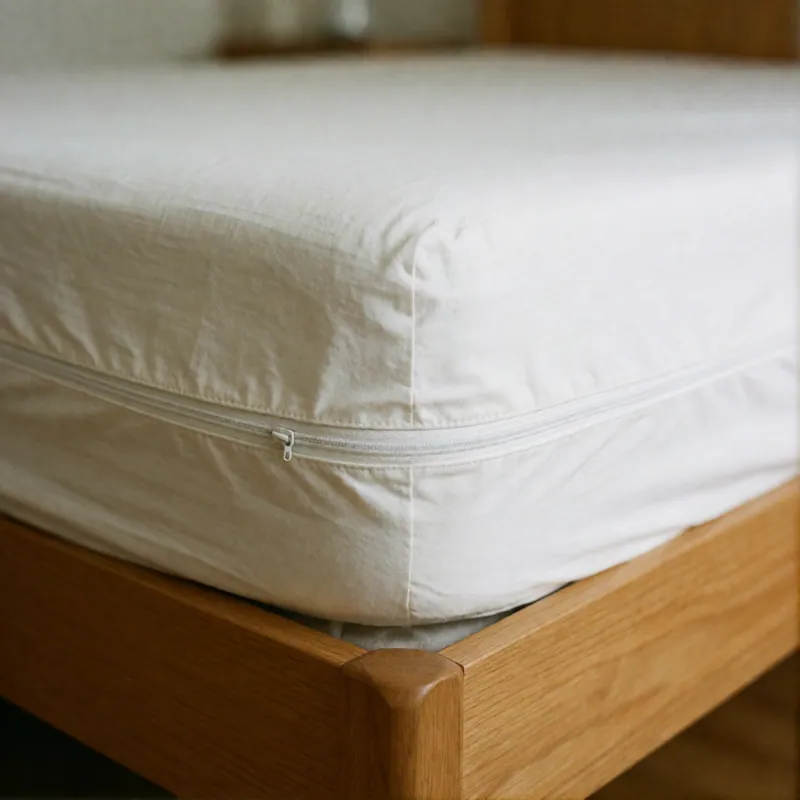
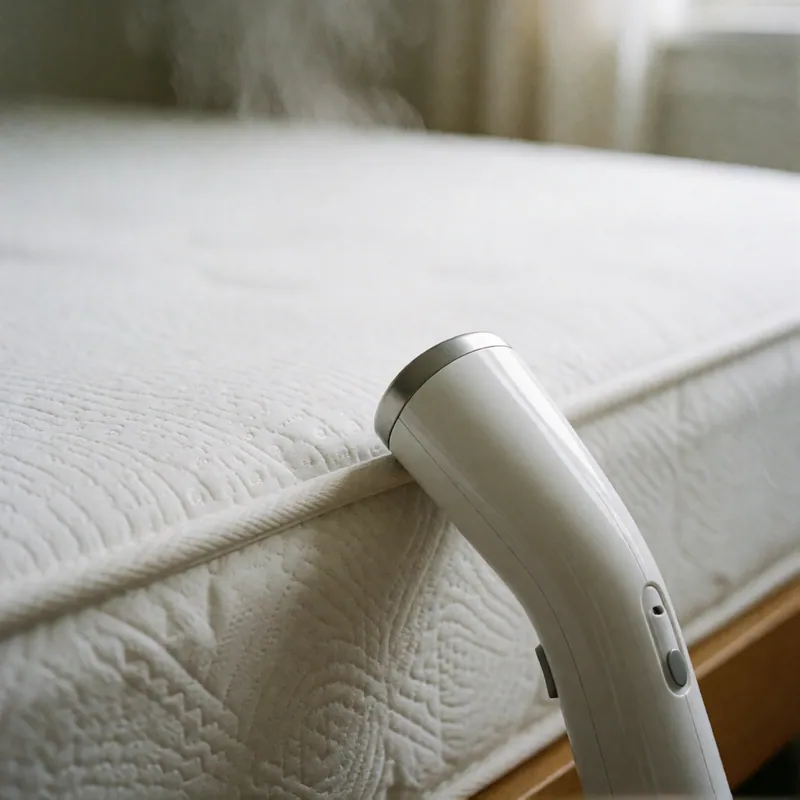
Close view of the corner of a mattress zipped into a plain white fabric cover, the zipper running along its side, on a wooden bed frame.AI-generated illustration. Not a real home or business. Close view of the white nozzle of a small portable steamer resting against the seam of a bare mattress on a wooden bed.AI-generated illustration. Not a real home or business.

What the inspection looks for

The technician starts at the bed and works outward: the mattress and box spring seams, the bed frame and the headboard, the nightstands, the baseboard behind the bed, the outlet covers nearby, then the sofa and any chair somebody sleeps in. A flashlight held flat along a seam shows the spots and the skins that a straight-on look misses.

What decides the course is how far it has reached: one bedroom or every room, the sofa or not, and whether the apartments beside, above and below have it too. You hear which rooms are in the course before the technician leaves, and the preparation list is written for those rooms.

Inspection first. Every job starts with an inspection. There's no charge for it, and you don't have to book anything after it.

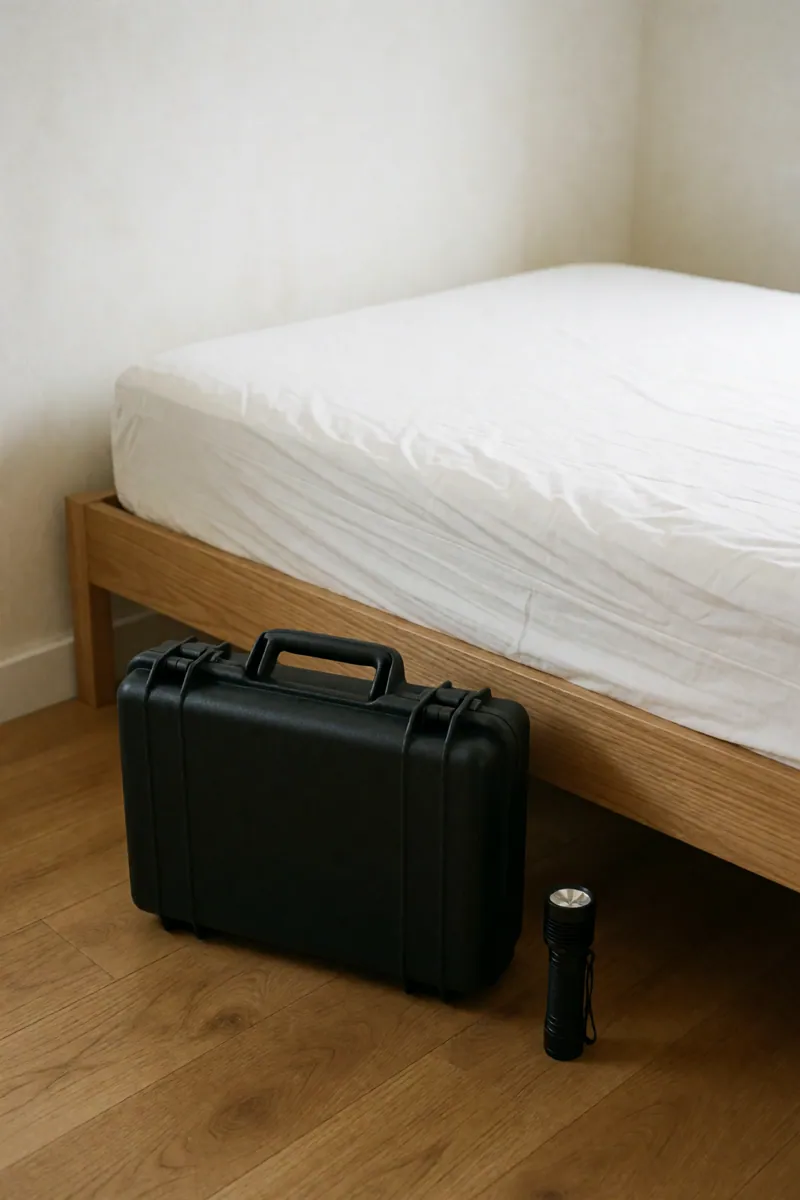
A corner of a bedroom with a bare mattress in a plain white cover on a wooden bed frame, and a plain black tool case and a small flashlight on the wooden floor beside it.AI-generated illustration. Not a real home or business.

Teodoro Villacorta-Brandt

Owner and lead technician

Plans every course and checks every plan, and does most of the bed bug work himself.

Teodoro reads a kitchen from the floor up: the baseboard, the gap behind the stove, the pipe that comes through the wall under the sink.

Every bed bug course is planned by him before it starts, room by room, with the preparation list for that home.

The course, visit by visit

Three visits, and every one of them is on the agreement, with its date, its price and its tax, before you sign.

  1. The first visit: a treatment

    At least 72 hours after you sign, so there is time for the preparation list, and for a home after your three business days to cancel unless you ask in writing to start sooner. It takes about two and a half hours for a studio or one-bedroom, three and a half hours for a two-bedroom and four and a half hours for three bedrooms or more and for a house. The rooms on the agreement are vacuumed first, seam by seam, and what the vacuum collected leaves the building sealed in a bag. Steam goes into the mattress and box spring seams, the tufts and the joints of the bed frame. A residual treatment goes into the cracks of the frame, along the baseboards and into the backs of the furniture, and a dust into the voids behind the outlet covers near the bed. Monitors go under the bed legs. The mattress stays: it's treated, not thrown out.

  2. The second visit: a treatment

    Two weeks after the first visit, about two hours. Bed bug eggs hatch in the days after the first treatment, and the young ones need several feeds before they can lay eggs themselves. The second treatment is timed for them: the same rooms, the same seams and joints, in a shorter visit, before they're old enough to start the next generation.

  3. The third visit: a follow-up check

    Two weeks after the second visit, about an hour. The check is for looking: the seams, the frame, the furniture and the monitors under the bed legs. No sign of bed bugs is the first of the two clean checks in a row the course is waiting for; any sign means it goes on.

Bed bug course: a treatment, a second treatment two weeks later and a follow-up check two weeks after that. A course's price is split into equal parts, one invoiced after each of its scheduled visits, so you never pay for a visit that hasn't happened.
The homeThe course, before taxEach of three partsTax on each part
Studio or one bedroom$597$199.00$17.66
Two bedrooms$795$265.00$23.52
Three bedrooms or more$996$332.00$29.47
A house$996$332.00$29.47

A return visit takes about two hours.

Until two checks find nothing. Bed bugs usually take more than one visit. The course is a treatment, a second treatment two weeks later and a follow-up check two weeks after that, and we return until two checks in a row find no sign, within 120 days of the first treatment, as part of the course price.

What you can do before anyone comes

Keep sleeping in your own bed. Moving to the sofa or to a friend's apartment doesn't leave the bed bugs behind: they follow the sleeper, and the ones in your bag come with you.

Start the laundry early. Everything washable from the rooms in the course goes into plastic bags in the room, tied shut, then through a hot wash and a hot dryer, and into new bags that stay closed until after the second treatment. It's the longest part of the preparation, and the part the treatment depends on.

Put nothing down yourself. A spray or a fogger from a store drives bed bugs deeper into the walls and into the next apartment, and leaves the technician chasing them.

A worked example, priced in full

Worked out with the same arithmetic as a real agreement: each visit's date, its share of the price and the sales tax on it. The household is invented.

A bed bug course for a one-bedroom co-op apartment An owner in Jackson Heights

  • A treatment, Tuesday, March 9, 2027two and a half hours; tax $17.66$199.00
  • A treatment, Tuesday, March 23, 2027two hours; tax $17.66$199.00
  • A follow-up check, Tuesday, April 6, 2027an hour; tax $17.66$199.00
  • Before taxthree visits$597.00
  • Sales tax (8.875%)on each visit's invoice$52.98
  • In allinvoiced visit by visit$649.98

Signed on Thursday, March 4, 2027. The three business days to cancel end at midnight on Monday, March 8, 2027, so the first visit is Tuesday, March 9, 2027, 7 am to 9 am. Return visits are part of the course until Wednesday, July 7, 2027.

Three days to cancel

Before anything is applied

What you're given before a treatment, and the lines this work doesn't cross.

Nothing that fills a room. We don't use foggers, bug bombs or fuel-burning heaters, and we don't fumigate or tent a building. New York City's Fire Code keeps fuel-burning heaters out of homes and puts fogging and fumigation in the hands of companies the Fire Department has approved.

The label comes to you. We don't name products on this website. Before we treat, we give you the label information for every product we plan to use, including its warnings, on paper or by e-mail, whichever you prefer. After each visit you get a written record of what was used, where, and for which pest.

Staying out, and for how long. Before we treat, we tell you who should stay out of treated areas and for how long, exactly as the product label says.

If you rent. If you rent in New York City, your building's owner is responsible for keeping your apartment free of pests, bed bugs included. Tell your landlord in writing first; you can also call 311.

Bed bugs aren't part of a monthly or quarterly plan: they're a course of their own.

Book an inspection for bed bugs

Book an inspection, at least twenty-four hours ahead. There's no charge for it, and nothing has to follow it.