Preparing for a visit
Before a wasp nest visit
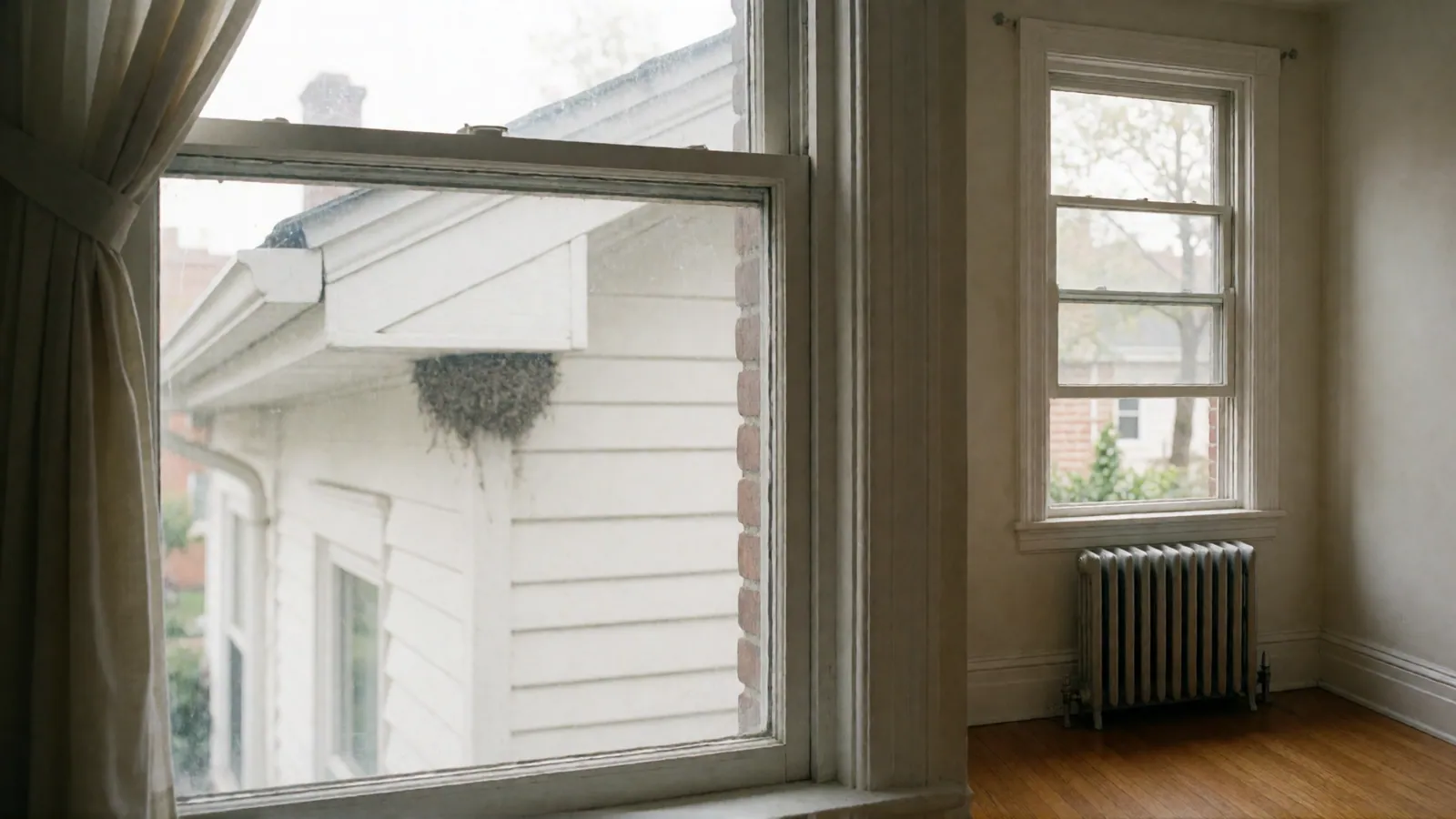
Everyone kept away from the nest, nothing done to it, the area below it cleared and the windows nearby closed: getting ready for a wasp or hornet nest visit.
AI-generated illustration. Not a real home or business.
Why this list
Most stings at a nest come from somebody trying to handle it first: a broom, a hose, a can of spray. Leave it for the visit, and keep people and pets away from where the wasps fly in and out.
Exactly where the nest is, and how high, sets the price of the course and what the technician brings, so it is worth telling the office as precisely as you can.
The list, item by item
Nine things to do. Each visit comes with its preparation list, and this is the one for wasps and hornets, in full.
Keep everyone, children and pets especially, away from the nest.
Don't block, spray, flood or hit the nest before we come.
Tell us exactly where it is, on an eave, a wall, a fire escape or a vent, and how high.
Clear the area around and below the nest so it can be reached.
Close the nearby windows on the day.
Tell us if anyone in the home is allergic to stings.
After the treatment, stay away from the nest for a day or two while returning wasps die off.
Don't take the nest down yourself: we come back for it.
If the insects are fuzzy and gathered in a ball on a branch, they are probably honeybees: call a beekeeper, not us.
On the day
The treatment takes about forty-five minutes for a nest reachable from the ground, an hour for a nest reached from a ladder or a fire escape and an hour and fifteen minutes for a nest inside a wall, a soffit or a vent. Keep the nearby windows closed, and keep everyone inside or well away while the technician works.
Stay away from the nest for a day or two afterward while the wasps coming back meet the treatment, and don't take the nest down yourself: the second visit, a return to take the nest down, is two days later.
Nests on the building only. We remove wasp and hornet nests on or in your building. Nests in trees, hedges or the ground fall under New York's lawn-pesticide rules, which need a separate written contract and notice to your neighbors, so we don't treat those.
Not honeybees. Honeybees aren't pests. For a swarm, call a beekeeper, and please don't spray it.
Staying out, and for how long. Before we treat, we tell you who should stay out of treated areas and for how long, exactly as the product label says.
Start with an inspection
Book an inspection, at least twenty-four hours ahead. There's no charge for it, and nothing has to follow it.